
Free Grief Coach Certification: How to Get Certified (GIEG) & Start Coaching Confidently
If you’re searching for free grief coach certification, you’re likely looking for a credible way to learn grief support skills and build confidence—without immediately paying thousands of dollars. The challenge is that “certification” can mean different things: from a learning completion certificate to a full professional credential with supervision, assessments, and an agreed scope of practice.
This guide helps you choose the right track, verify what you’re actually enrolling in (including the intent behind gieg coach certification queries), and take concrete steps to start coaching ethically—often even before you finish any paid credential.
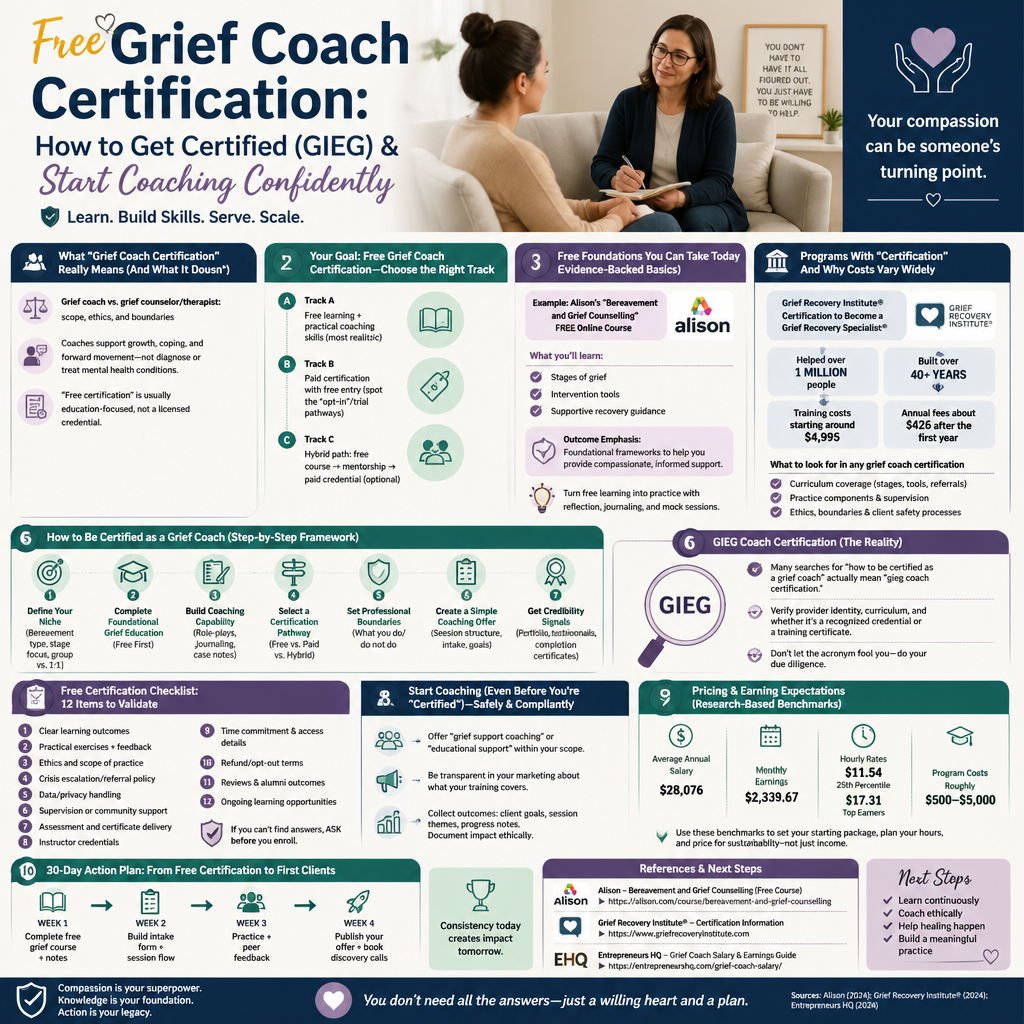
Quick start: free grief coach certification options and a safe path
Use this roadmap:
- Start with free grief foundations (a course focused on grief counseling basics and interventions).
- Turn learning into practice (role-plays, journaling frameworks, session note templates).
- Choose a certification pathway (free learning + practical skills, paid certification, or a hybrid).
- Set boundaries and a referral protocol (safety first: you coach, you don’t treat).
- Launch a simple offer and collect outcome notes to build credibility.
1) What “grief coach certification” really means (and what it doesn’t)
Grief coach vs. grief counselor/therapist
A key reason people get confused is that grief-related work has multiple roles:
- Grief coach: typically helps clients process, navigate change, and develop coping strategies through coaching structures and supportive guidance.
- Grief counselor/therapist: typically provides clinical support, uses therapeutic interventions, and may require specific licenses and compliance obligations.
Scope matters. If you want to learn how to be certified as a grief coach, you must also learn what you will not do—especially around diagnosis, crisis treatment, or anything that crosses into clinical therapy without the right qualifications.
Why “free certification” can be education-focused rather than credentialing
Many providers use the word “certification” to describe a completion certificate after a free course—not a regulated credential. That’s not automatically bad. It can still be valuable if:
- the learning outcomes are clear,
- there are practice elements,
- there’s an ethics/scope statement, and
- you understand it doesn’t replace licensing where licensing is required.
2) Your goal: free grief coach certification—choose the right track
When you search “free grief coach certification,” you’re often really asking, “How do I become a grief coach without paying upfront?” Here are three realistic tracks:
Track A: Free learning + practical coaching skills (most realistic)
You complete free education, build real coaching capability, and use completion proof (plus testimonials/outcomes) to start coaching within an agreed scope.
Track B: Paid certification with free entry (spot the opt-in/trial pathway)
Some programs offer free “opt-in” content, webinars, or trial coaching sessions. You may still pay for the actual certification, but you can validate fit first.
Track C: Hybrid path: free course → mentorship → paid credential (optional)
Start with a free grief counseling course, then add structured mentorship or supervision, and optionally pursue a paid credential later—when you’re ready.
3) Free foundations you can take today (evidence-backed basics)
Before you chase any free certification badge, build your foundation. One strong example is a free online course designed to introduce grief counseling concepts.
Example: Alison’s “Bereavement and Grief Counselling” (free online course)
Resource: Alison — “Bereavement and Grief Counselling”
https://alison.com/course/bereavement-and-grief-counselling
What it covers (from the course summary):
- Stages of grief and how grief can evolve over time
- Intervention tools for the bereaved
- Supportive recovery guidance emphasizing empathy and structured support
How to turn free course learning into coaching practice:
- Create a “session map”: turn the stages and tools into a simple coaching flow (intake → reflection → coping plan → follow-up).
- Practice with prompts: journaling questions you can ask clients (e.g., “What feels hardest today?” “What support has helped before?”).
- Document outcomes: even if you don’t have clients yet, track your own learning and what coaching strategies feel effective.
4) Programs with “certification” and why costs vary widely
Not all grief coach training is priced the same because “certification” often includes different depth:
- Some are learning-only (free or low cost).
- Some add practice + assessments.
- Some include mentorship, supervision, and referral-ready materials.
How costs differ: Grief Recovery Institute (paid certification example)
Resource: Grief Recovery Institute — Certification Training
https://programs.griefrecoverymethod.com/certification-opt-in
Why it’s useful for comparison: It shows how a paid certification can be structured as a professional program with training depth.
Quantitative details to note:
- Mentions helping over 1 million people
- Training refined over 40+ years
- Training costs starting around $4,995
- Annual fees about $426 after the first year
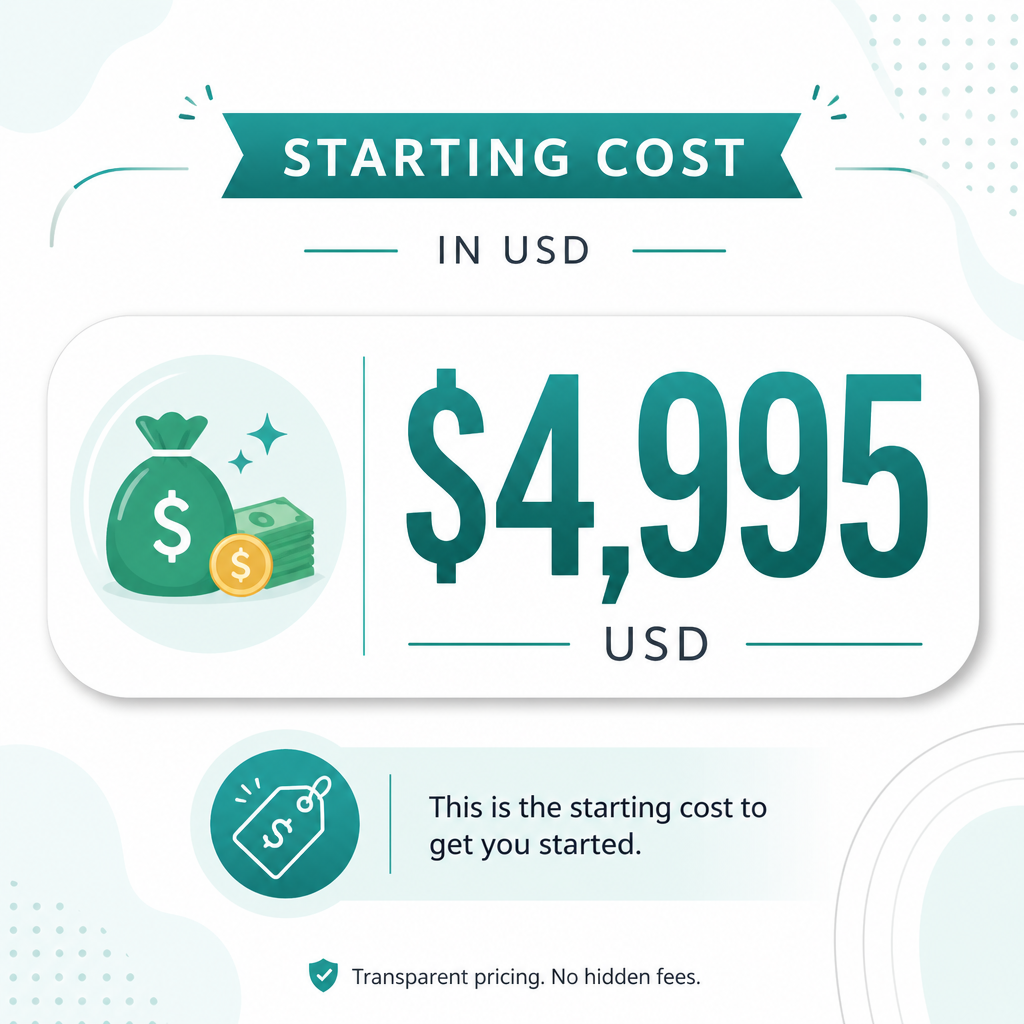
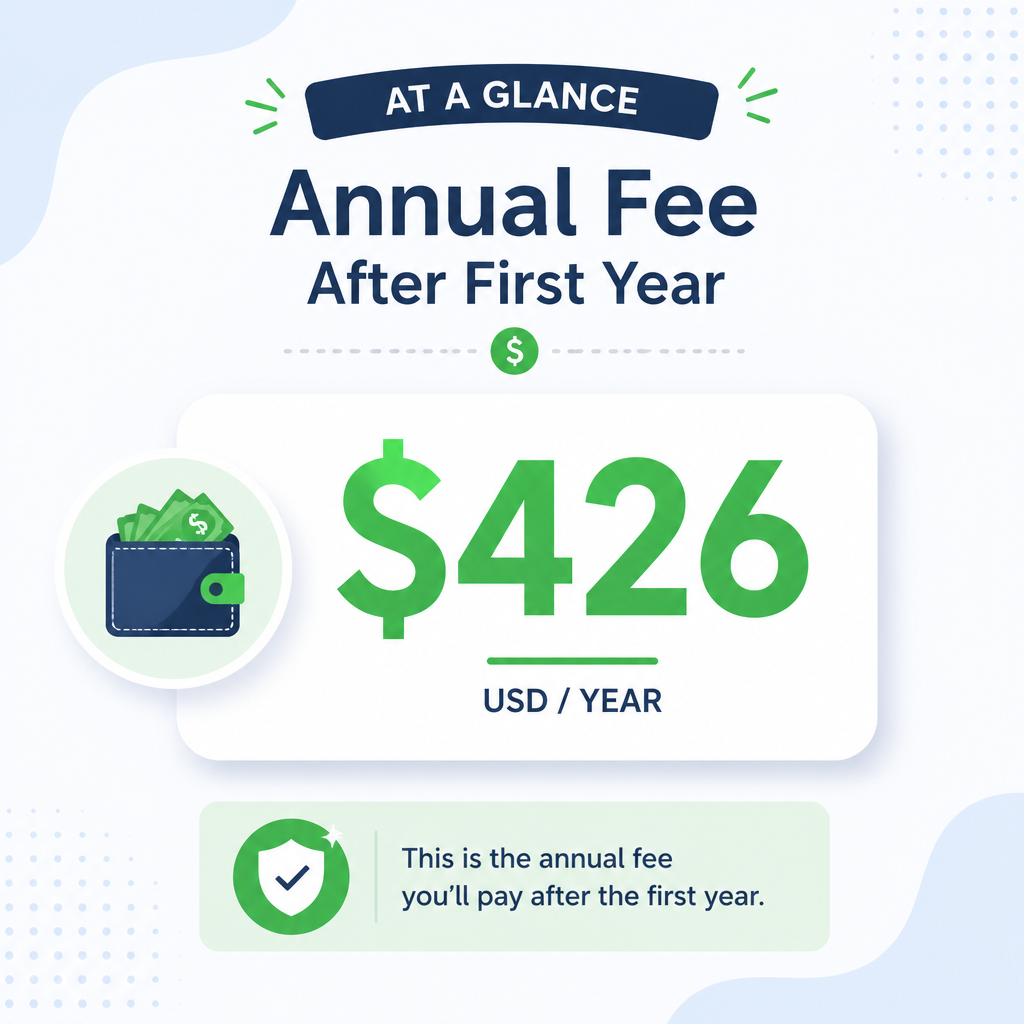
Key takeaway: This kind of program may be far beyond “free certification,” but it’s a useful benchmark for what full certification can include.
What to look for in any grief coach certification
Whether it’s a free certification, a paid credential, or gieg coach certification-related training, check for:
- Curriculum coverage: stages of grief, intervention tools, and how to support safely
- Practice components: role-plays, case reviews, structured note-taking
- Supervision/community (or a clear path to get feedback)
- Ethics + scope of practice (crisis escalation and referral pathways)
- Client safety processes (how they handle risk and urgent needs)
5) How to be certified as a grief coach (step-by-step framework)
If you’re asking “how to be certified as a grief coach,” here’s a practical framework you can follow even when you start with free education.
Step 1: Define your niche
Choose a focus to avoid being “everything to everyone.” Examples:
- Bereavement type (loss of a partner, pet loss, miscarriage support, etc.)
- Grief stage focus (early shock vs. later adjustment)
- Format (group vs. 1:1)
Step 2: Complete foundational grief education (free first)
Start with free courses to build accurate understanding of grief dynamics and supportive interventions.
Step 3: Build coaching capability
Practice the mechanics:
- Intake questions and goal-setting
- Session structure and reflective listening
- Case notes and progress tracking
- Role-plays with peer feedback
Step 4: Select a certification pathway (free vs. paid vs. hybrid)
Pick the path that matches your budget and timeline. If you choose gieg coach certification (or any named training), verify the provider, curriculum, and scope.
Step 5: Set professional boundaries
Before you market yourself, write a boundary statement:
- What you do (coaching, coping support, structured reflection)
- What you don’t do (diagnosis, therapy claims, crisis management without referral)
Step 6: Create a simple coaching offer
Design an offer that’s easy to deliver and easy to explain:
- Session length and frequency
- Intake form and assessment questions
- Client goals and expected outcomes (support, coping tools, adjustment planning)
Step 7: Get credibility signals
“Certification” is one signal; others matter too:
- Completion certificates (from training)
- Testimonials (when ethical and appropriate)
- A portfolio of frameworks (session outlines, coping worksheets)
- Clear documentation of your coaching approach and boundaries
6) GIEG coach certification (and the reality behind “how to be certified as a grief coach” queries)
Many people searching “gieg coach certification” are not necessarily searching for a single universally recognized credential. Often, they mean: “I want to be trained and certified as a grief coach, ideally for free or cheaply.”
So how should you approach it?
- Verify the provider identity: who runs the program, where they operate, and whether the training is consistent.
- Confirm the curriculum: grief coaching topics should align with safe intervention basics and ethical boundaries.
- Check whether it’s a credential or a training certificate: “free entry” may lead to paid credentialing later.
- Look for a scope statement: if none exists, treat it as a red flag.
Checklist before enrolling:
- learning outcomes stated clearly
- practice component included
- ethics and crisis referral policy provided
- certificate format and requirements explained
7) Free certification checklist: 12 items to validate before you enroll
Use this checklist to protect yourself when chasing free certification or “free grief coach certification” offers:
- Clear learning outcomes (what you can do after finishing)
- Practical exercises (not only reading/videos)
- Assessment or feedback (quizzes, case review, peer evaluation)
- Ethics and scope of practice
- Crisis escalation/referral policy
- Client safety guidance (risk screening principles)
- Data/privacy expectations (how notes are handled)
- Supervision or community support (even if informal)
- Certificate delivery terms (what you receive and when)
- Refund/opt-out terms (especially after opt-ins)
- Transparency about what certification does not mean
- Reputation signals (reviews, provider history, documentation)
8) Start coaching even before you’re “certified” (safe, compliant launch)
You may not need a paid credential to start helping people in a structured and ethical way—depending on local laws and your training scope. Many coaches begin with a clearly labeled service like:
- Grief support coaching
- Educational grief support (if that matches your training)
- Structured coping plan sessions
How to market safely:
- Be transparent about your training and limitations.
- Use language like “coaching” instead of “treatment” or “therapy” if you’re not licensed.
- Include a referral clause: “If you need clinical support, we will refer you to qualified professionals.”
Collect outcomes (ethically):
- Client goals (what “better” means to them)
- Session themes (what tools were used)
- Progress notes (how coping improves over time)
9) Pricing and earning expectations (benchmarks, used responsibly)
Compensation depends on location, credibility, and specialization. Still, you can use published benchmarks as a starting reference.
Entrepreneurs HQ benchmarks (to understand the market range)
Resource: Entrepreneurs HQ — “15 Top Grief Coach Certification Programs (2026 Rankings + Guide)”
https://entrepreneurshq.com/grief-coach-certification/
Quantitative facts reported:
- Average annual salary: $28,076
- Monthly earnings: $2,339.67
- Hourly rates range: $11.54 (25th percentile) to $17.31 (top earners)
- Program costs roughly ranging from $500 to $5,000

Translate benchmarks into your plan: If you’re starting with free grief coach certification foundations, aim for a “launch package” that’s affordable but sustainable—then increase pricing after you have outcome proof and clearer positioning.
10) 30-day action plan: from free grief coach certification to first clients
Here’s a simple 4-week plan you can follow immediately.
Week 1: Learn + take structured notes
- Complete a free grief education course (e.g., grief stages + intervention tools).
- Create a one-page coaching map: intake → reflection → coping plan → follow-up.
Week 2: Build your offer + intake flow
- Create an intake form (goals, support needs, boundaries acknowledgement).
- Draft a session agenda template and progress-note template.
- Write your ethical scope statement and referral language.
Week 3: Practice + peer feedback
- Run 2–4 practice sessions (role-play or with supportive peers/volunteers).
- Improve your coaching questions and session structure.
- Finalize your niche positioning (what you help with and how).
Week 4: Publish your offer + book discovery calls
- Create a simple landing page: who it’s for, what you do, your boundaries, what clients can expect.
- Offer a limited number of discovery calls or a starter package.
- Collect outcomes and testimonials as appropriate (with consent).
References and next steps
- Alison — Bereavement and Grief Counselling (Free Online Course): https://alison.com/course/bereavement-and-grief-counselling
- Grief Recovery Institute — Certification Training: https://programs.griefrecoverymethod.com/certification-opt-in
- Entrepreneurs HQ — 15 Top Grief Coach Certification Programs (2026 Rankings + Guide): https://entrepreneurshq.com/grief-coach-certification/
FAQ: free grief coach certification
Can I become a grief coach with a free certification?
You can build coaching skills with free grief education and a completion certificate. Just ensure you understand the scope, ethics, and whether you need additional mentorship or paid training to coach confidently.
What should “gieg coach certification” mean?
It may be a mis- or variant spelling used in search. Treat it as an intent signal, then verify the provider, curriculum, scope, and what credential (if any) you will receive.
Is grief coaching the same as grief counseling?
No. Coaching is not the same as clinical therapy. A grief coach focuses on supportive guidance and coping strategies, while counselors/therapists provide clinical treatment within their professional scope.