

Executive Coach Salary in 2025: How Much Do Executive Coaches Make?
How much do executive coaches make in 2025? The short answer: reported earnings range from around $45,000 for some early-career roles to well over $150,000 for high earners. A small number of established coaches may earn substantially more.
But there is no single, dependable “executive coach salary.” Some coaches are employees with a regular paycheck; others run independent businesses and build income client by client. Their revenue, expenses, benefits, and financial risk can look very different.
Here’s how to interpret the available estimates, what influences executive coach income, and how to decide whether this career path makes sense for you.

Executive coach salary benchmarks in 2025
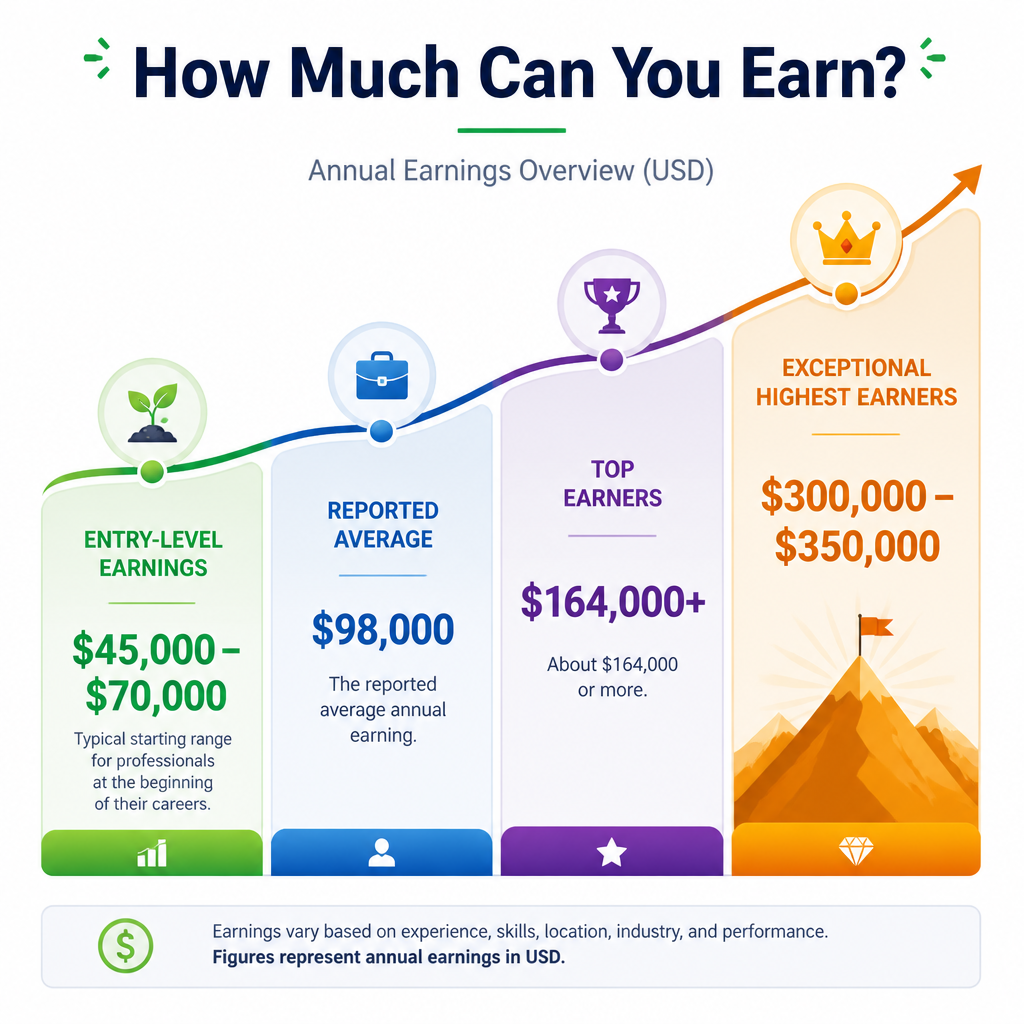
Salary sources report an average near $98,000 a year for executive coaches. The same set of estimates puts entry-level earnings around $45,000–$70,000, with top earners at about $164,000 or more. Exceptional figures of $300,000–$350,000 are also reported for the highest earners.
Treat these as estimates, not promises—or a guaranteed salary range. Salary figures may combine different job titles, locations, experience levels, and employment arrangements. In particular, an employee’s salary is not directly comparable with an independent coach’s business revenue or take-home pay after expenses.
The key question is not simply “What is the average?” It is “Which kind of coaching work am I considering, and what does income look like in that model?”
How earnings differ by employment model
Independent executive coaches
Independent coaches set their own fees and decide how many clients to serve. That flexibility can be appealing, but they also have to find clients, market their services, manage their business, and cover expenses such as training, insurance, software, and professional development.
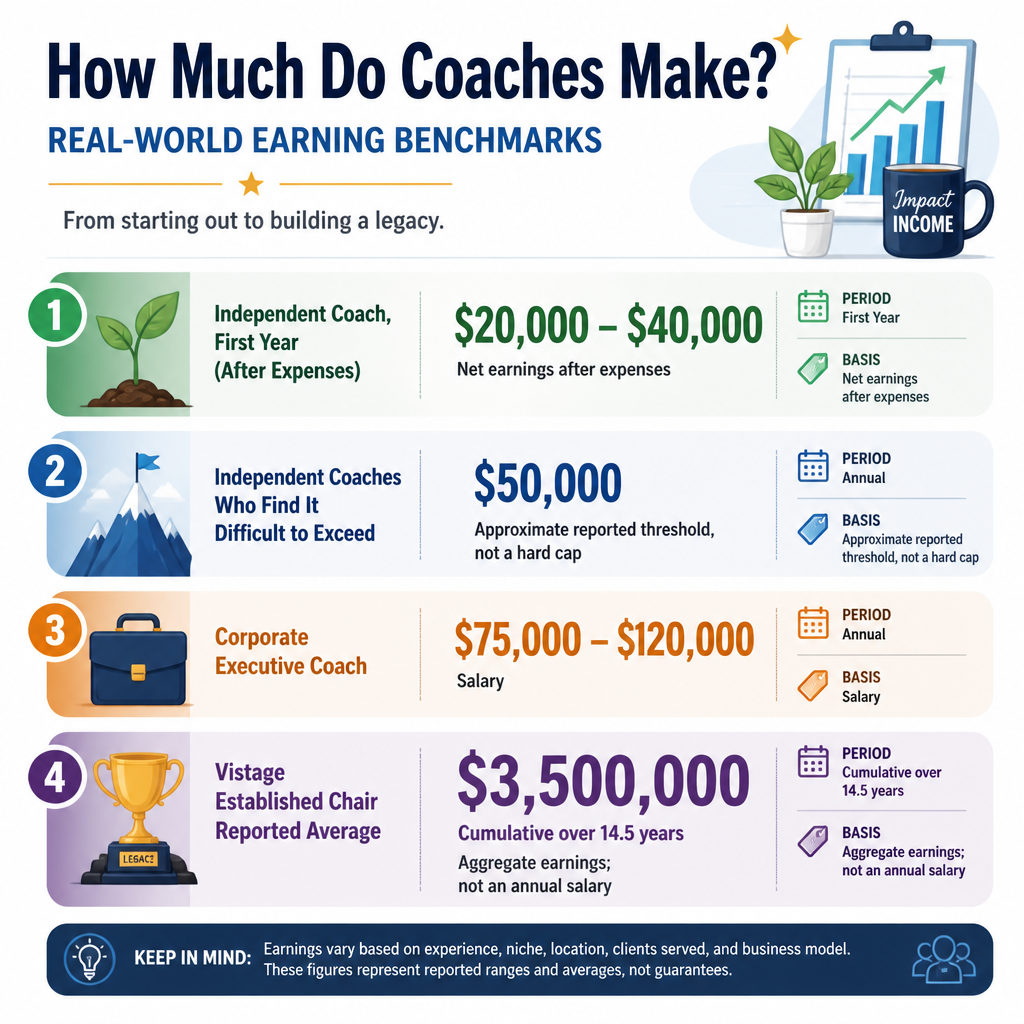
One industry source reports that independent coaches commonly earn $20,000–$40,000 in their first year after expenses. It also notes that many coaches find it difficult to move beyond roughly $50,000, even with credentials. These figures describe a reported pattern, not a rule: an established coach with a strong referral network, clear specialization, and consistent client demand may earn more.
Remember to distinguish gross revenue from personal income. A coach who invoices $100,000 does not necessarily take home $100,000 after operating costs, taxes, unpaid time, and periods without client work.
Corporate executive coaches
Coaches employed by a company or coaching organization may receive a salary, benefits, and a more predictable schedule. The research provided places corporate executive coach salaries at approximately $75,000–$120,000.
The trade-off is that employees may have less control over their client roster, fees, schedule, and service offerings. Compensation also depends on the exact role: some positions blend coaching with leadership development, talent management, or organizational consulting.
Group-based and membership models
Some organizations use a group-based model in which a coach facilitates peer advisory groups alongside individual coaching. Vistage, for example, describes recurring revenue and established Chairs earning six figures.
Its reported average of $3.5 million in aggregate earnings over a 14.5-year tenure is specific to that model. It is a cumulative figure across many years—not an annual salary—and should not be compared directly with a yearly employee salary. Results can depend on group size, retention, location, and the organization’s arrangements.
What affects executive coach salary?
Two people with the same job title can earn very different amounts. These factors often explain the gap:
- Experience and credibility: Senior leadership experience, a record of client outcomes, and trusted referrals can help a coach win higher-value engagements.
- Specialization: Coaches who focus on a defined audience or challenge—such as first-time executives, succession planning, or team effectiveness—may be easier for buyers to evaluate and refer.
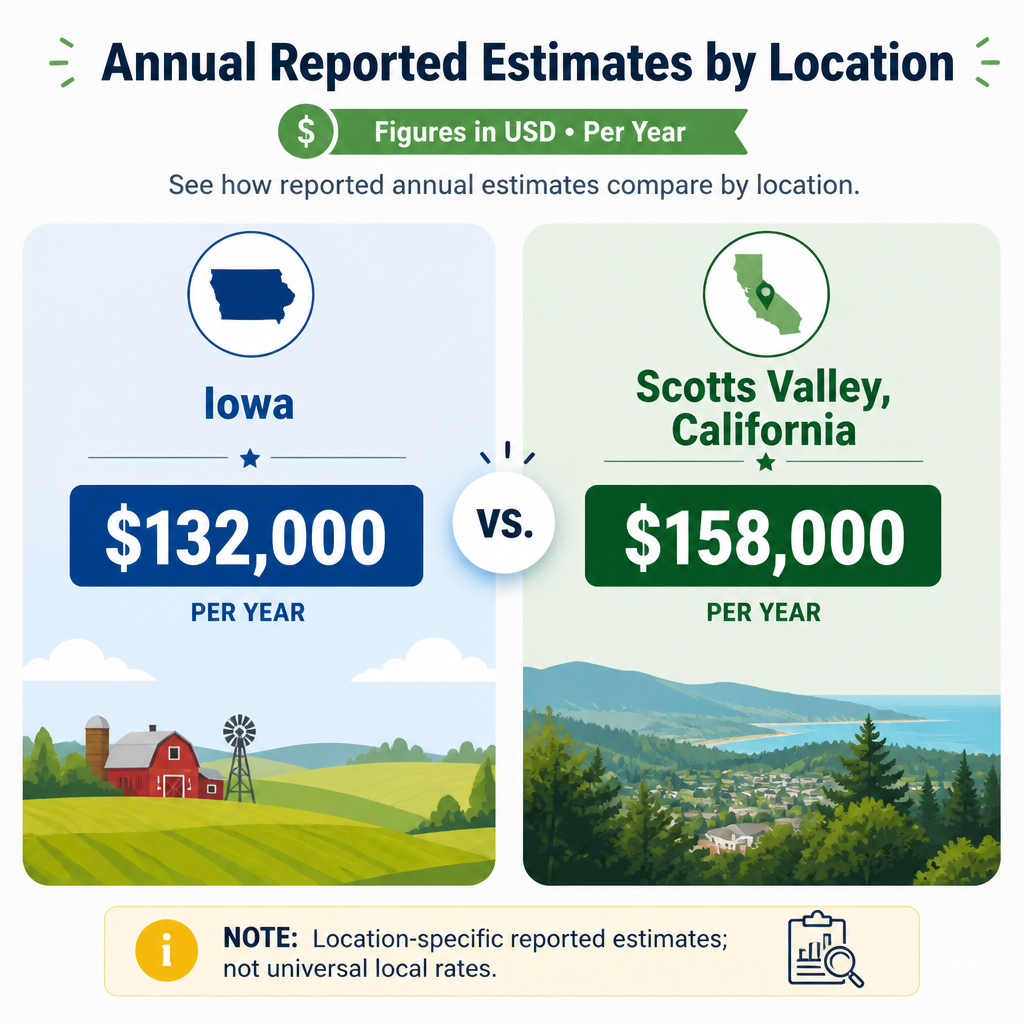
- Location: Some salary datasets show significant geographic variation. The research supplied reports estimates of about $132,000 in Iowa and $158,000 in Scotts Valley, California. These are location-specific reported figures, not universal local rates; methodology and sample size matter.
- Client network: Independent coaches depend heavily on relationships and referrals. A strong network can reduce the time spent searching for clients and help create a steadier pipeline.
- Work setting: Employment, solo practice, consulting-firm work, and group programs each have different pay structures, costs, and levels of risk.
Specialization and location can influence earning potential, but neither guarantees a particular income. A business model that consistently reaches the right clients usually matters just as much as a coach’s credentials.
How pricing choices shape income
Many coaches begin by charging for individual sessions. This is simple to understand, but hourly billing can make income harder to predict. Cancellations, administrative tasks, and gaps between clients also limit the number of paid hours in a week.
Other approaches include:
- Coaching packages: A defined engagement with a set number of sessions and clear goals. Packages can make revenue and expectations easier to plan.
- Retainers: A client pays an agreed recurring fee for ongoing access or support. A retainer can create more predictable revenue when the scope is clear.
- Group programs: A coach works with several leaders or a peer group at once. This can increase reach, though it requires facilitation skills and a reliable way to attract participants.
Moving to packages or retainers does not automatically increase earnings. Pricing should reflect the value and scope of the work, the client’s needs, and the time required to deliver it. Clear contracts and boundaries help prevent a promising engagement from turning into unlimited, underpaid support.
How to build a career as an executive coach
There is no single route into executive coaching. Many coaches bring relevant leadership, organizational, or consulting experience, then add formal coach training and supervised practice. Credentials from organizations such as the International Coaching Federation (ICF) or ATD may support professional development and credibility, depending on the role and clients you want to serve.
Certification alone does not guarantee clients or a higher salary. Buyers may also look for relevant experience, a clear coaching approach, strong references, and evidence that you can work effectively with leaders. If you are considering a training program, check its curriculum, practical coaching hours, recognition, and total cost before enrolling.
Is executive coaching a good career in 2025?
It can be a rewarding career for people who enjoy helping leaders think clearly, build skills, and follow through on meaningful goals. The reported salary benchmarks suggest attractive earning potential, particularly in established roles or practices. But income potential is only one side of the decision.
Independent coaches may face slow client acquisition, irregular revenue, and business expenses. Corporate positions can offer stability and benefits, but usually provide less independence. Group models may generate recurring income, while requiring sustained recruitment, facilitation, and member retention.
Before choosing a path, ask yourself: Do you want a predictable paycheck or the autonomy of running a practice? Are you comfortable selling your services and building a referral network? Can you manage a period when bookings are inconsistent? Your answers are likely to matter more than a headline salary figure.
Practical takeaways
- Use the reported average of around $98,000 as a benchmark, not a personal earnings forecast.
- Compare salary with take-home income: independent business expenses and unpaid work make a major difference.
- Choose an employment model that fits your appetite for stability, autonomy, and business development.
- Build relevant experience, practical coaching skills, and a focused network; credentials can help, but do not ensure success.
- Consider packages, retainers, or group work when they suit your clients and delivery style—not simply because they sound more profitable.
Bottom line: Executive coach salary in 2025 can range widely, from modest early-stage independent earnings to six-figure compensation in established roles and practices. The strongest estimate for your own future will come from matching your experience, client market, pricing, and business model—not from relying on one average.
Sources
- Vistage: How Much Do Executive Coaches Make?
- John Mattone: Executive Coach Salary 2026: What Most People Miss (later-year salary estimates used as context, not as a verified 2025 measure).
- ACC Jobline: What Does an Executive Coach Do? Career Overview