
Trauma Recovery Coaching: How It Works, How It Differs From Therapy, and What to Expect
Trauma recovery coaching is present-focused, trauma-informed, and goal-based support that helps you stabilize, build coping skills, and move toward a meaningful life—without replacing clinical therapy. Learn how it works, what symptoms it can help with, how coaches differ from therapists, what sessions typically look like, and how to choose a qualified coach. Includes key prevalence stats: 5.2M Americans live with PTSD; 70% experience a traumatic event; 27% of those with PTSD attempt suicide.
Quick start: how trauma recovery coaching works
Trauma recovery coaching is a trauma-informed, goal-based approach that focuses on what you can do now—to improve coping, emotional regulation, boundaries, routines, and relationships. It’s non-therapeutic (it doesn’t diagnose or treat mental health disorders), but it can help you build practical skills and direction while you heal.
In this guide, you’ll learn what trauma recovery coaching is (and isn’t), how trauma affects the body and mind, how coaching differs from therapy, what a session may look like, what to expect about progress and setbacks, and how to choose a coach you can trust.
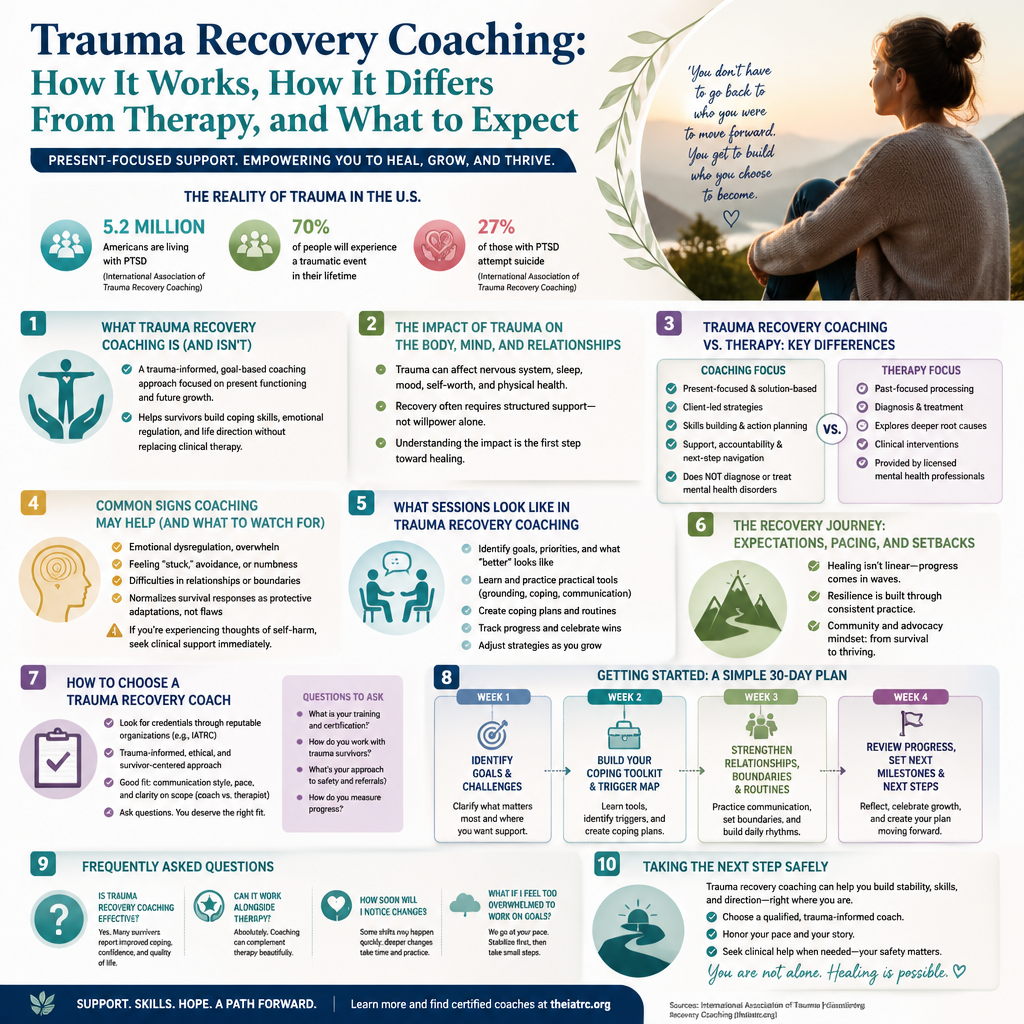
1) What trauma recovery coaching is (and what it isn’t)
Definition: present-focused, trauma-informed, goal-based support
Trauma recovery coaching is a form of trauma-informed coaching where a trained coach helps you:
- Clarify your recovery goals (e.g., stability, boundaries, communication, emotional regulation, safer routines)
- Build coping skills for triggers and overwhelm
- Practice new behaviors in daily life (with accountability and reflection)
- Create a recovery plan that supports your present functioning and future growth
The core promise is simple: support survivors in rebuilding life—without replacing clinical therapy or psychiatric care.
What trauma recovery coaching isn’t
A reputable trauma recovery coach typically does not:
- Diagnose mental health conditions
- Treat PTSD, depression, anxiety, or other disorders
- Provide clinical psychotherapy or conduct trauma processing in the way a licensed therapist might
Instead, coaching offers psychoeducation, skills practice, resilience planning, accountability, and next-step navigation. If you need therapy, medication management, or specialized clinical treatment, a good coach should help you identify the right path and stay within scope.
2) The impact of trauma on the body, mind, and relationships
Trauma doesn’t stay “in the past.” It can change how your nervous system responds, how your body holds stress, and how you relate to yourself and other people.
How trauma can affect you
Traumatic experiences may contribute to:
- Emotional dysregulation (big feelings that feel hard to manage)
- Anxiety, numbness, or hypervigilance
- A sense of being stuck, overwhelmed, or disconnected
- Avoidance (staying away from reminders, conversations, or situations)
- Relationship difficulties (trust, communication, boundaries, conflict patterns)
Why recovery often needs structured support
When your survival system has been activated for a long time, it can be exhausting to try to “just power through.” Recovery tends to require skills, practice, and supportive accountability—not willpower alone.
Trauma recovery coaching can be one practical layer in your support system because it helps you build day-to-day stability and decision-making you can rely on.
Trauma and PTSD prevalence (risk context)
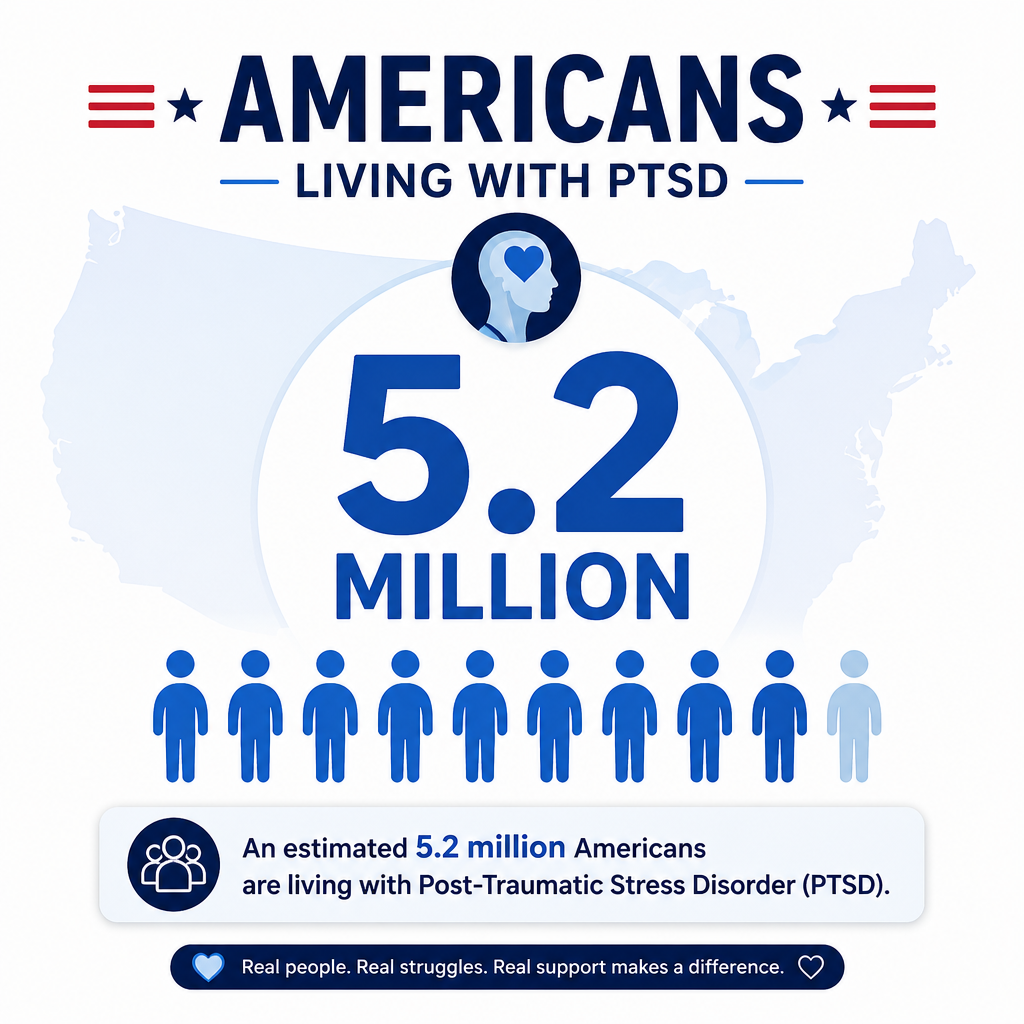
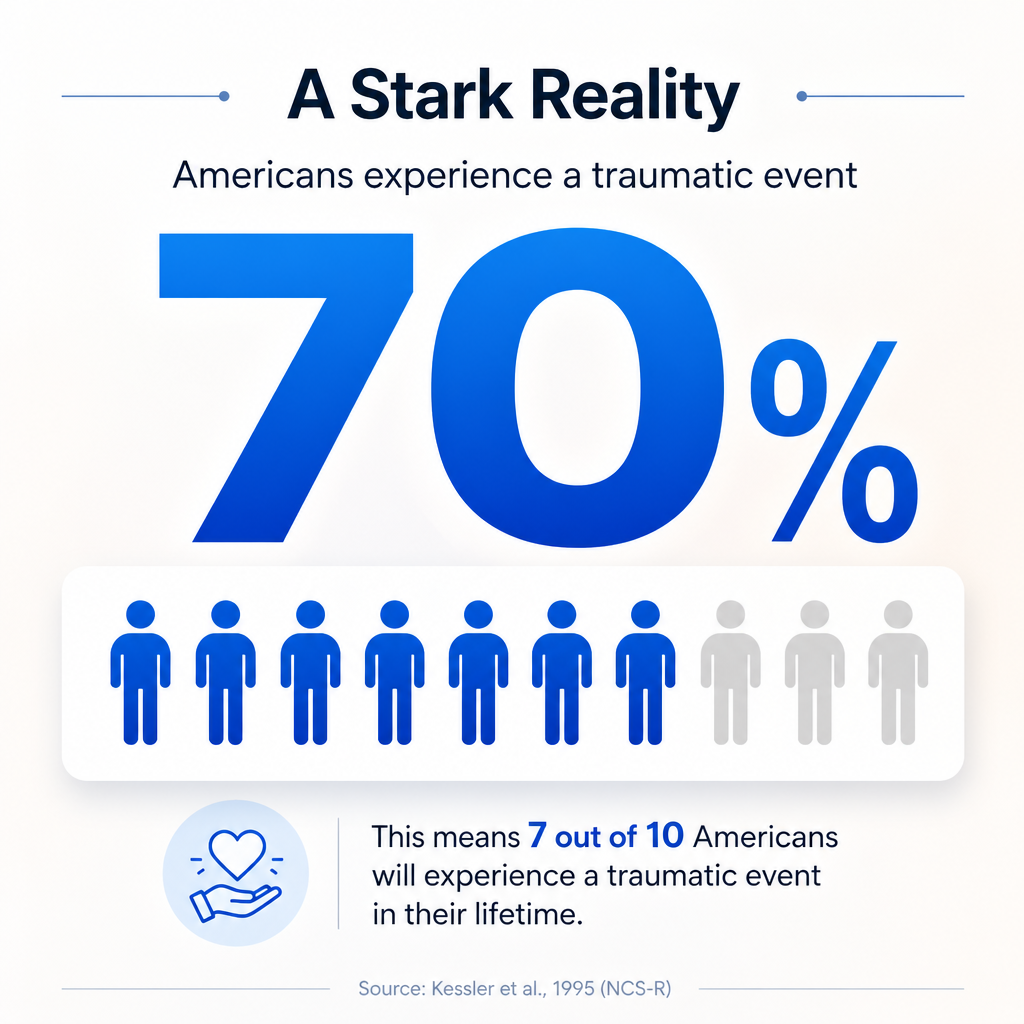
To understand why trauma-informed support matters, consider these widely referenced statistics from the International Association of Trauma Recovery Coaching:
- 5.2 million Americans are living with PTSD
- 70% of Americans experience a traumatic event in their lifetime
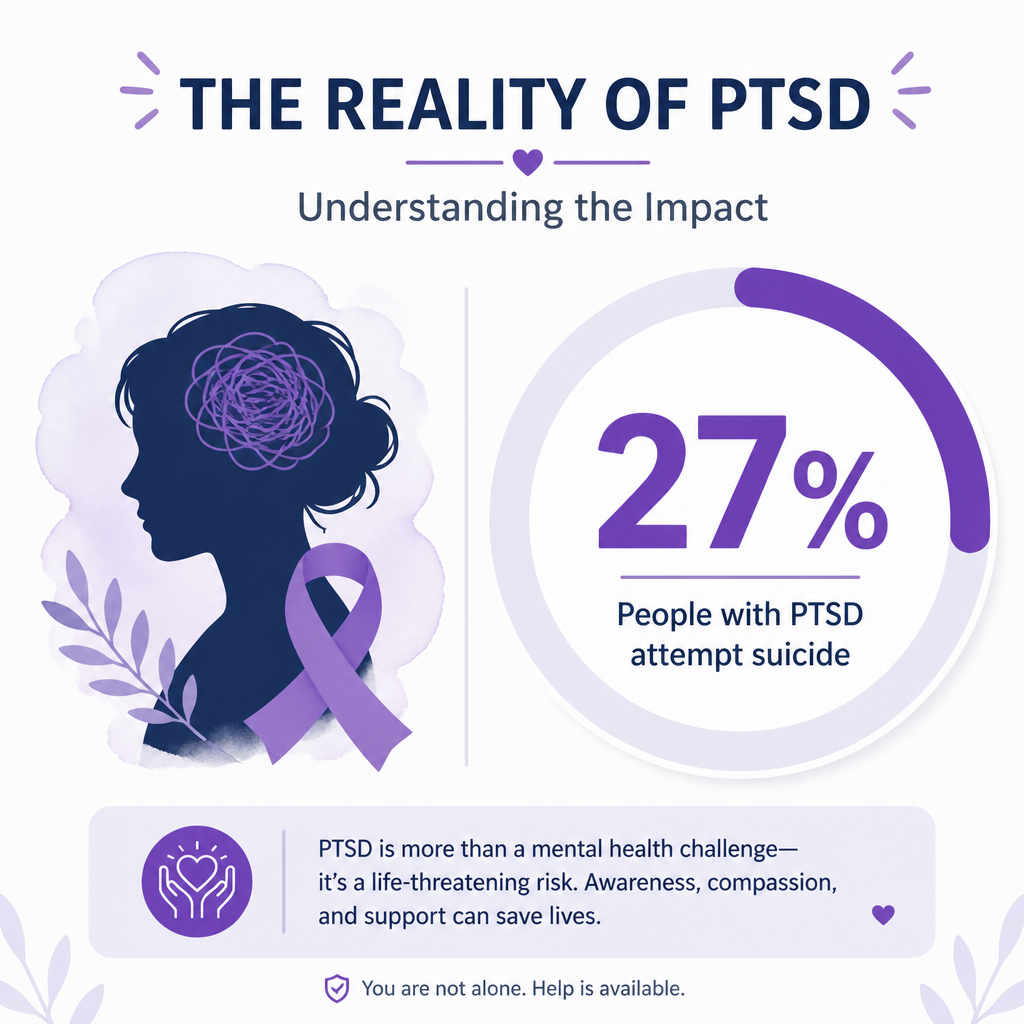
- 27% of those with PTSD attempt suicide
These numbers highlight the importance of accessible, ethical, trauma-informed guidance—especially support that helps survivors move toward safety, coping, and a meaningful future.
3) Trauma recovery coaching vs. therapy: key differences you should understand
Orientation: present-focused coaching vs. diagnosis/treatment
Here’s a simple way to differentiate the two:
- Trauma recovery coaching is typically present-focused and solution-based, using client-led goals and skills practice.
- Therapy is typically oriented toward assessment, diagnosis, and clinical treatment, often including work that involves past experiences and therapeutic processing.
What a coach may provide
Depending on the coach’s training and your needs, coaching may include:
- Psychoeducation (learning how trauma can affect the body and choices)
- Grounding and coping strategies for triggers
- Emotional regulation tools and “in-the-moment” support plans
- Resilience planning (how you respond over time, not just in one moment)
- Accountability and reflection (what worked, what didn’t, what you’ll adjust)
- Support navigating next steps (including referrals when clinical care is needed)
What a coach typically does not do
Coaching should not replace professional treatment. A coach generally won’t:
- Diagnose conditions like PTSD or major depressive disorder
- Run clinical psychotherapy or trauma-focused treatment protocols
- Claim to cure trauma symptoms
How coaching can work alongside therapy
If you’re already in therapy, trauma recovery coaching can complement it by focusing on:
- Turning therapeutic insights into daily actions
- Building consistent routines and coping plans
- Strengthening boundaries and relationship skills
- Tracking functional progress (what you can do differently now)
4) Common signs that coaching may help (and what to watch for)
Signs trauma recovery coaching may be a good fit
Coaching often helps when you experience:
- Emotional dysregulation (you want tools that work in real moments)
- Overwhelm or feeling stuck in “survival mode”
- Avoidance that limits your life goals and relationships
- Difficulty maintaining routines (work, sleep, self-care, responsibilities)
- Relationship strain (boundaries, conflict patterns, trust)
Normalizing survival responses
One powerful coaching shift is reframing. Many survivors have “negative” patterns that actually served a protective purpose. A trauma-informed coach may help you translate behaviors into adaptive survival signals, such as:
- “I shut down” → a nervous-system strategy to reduce threat
- “I get angry quickly” → a boundary-protecting response
- “I avoid reminders” → an attempt to stay safe emotionally
Once you understand what the behavior is trying to protect, you can choose alternatives that still honor safety—without sacrificing your future.
Safety and referral guidance
If you’re experiencing severe symptoms, safety concerns, or crisis-level distress, coaching should not be your only support. A qualified coach should help you access appropriate clinical care.
If you are in immediate danger or considering self-harm, contact local emergency services or a crisis hotline in your country right away.
5) What sessions look like in trauma recovery coaching
Session focus: goals, priorities, and real-life functioning
While every coach’s style differs, many trauma recovery coaching sessions follow a structure like:
- Check-in: what’s happening for you since the last session
- Goal review: what matters right now for safety, coping, and direction
- Skills and planning: choose tools you can use during triggers and stress
- Action steps: small, practical commitments for the week ahead
- Reflection: what you learned, what you’ll adjust, and what success looks like
Practical tools you may practice
Common examples include:
- Grounding strategies to come back to the present
- Coping plans for predictable trigger situations
- Communication practice (boundaries, assertive scripts)
- Habit building around sleep, routines, and self-care
- Relationship mapping (support vs. stress patterns)
Tracking progress that matters
Coaching typically measures progress through outcomes you can live with—like:
- Improved coping response time
- Reduced escalation during triggers
- More consistent routines
- Stronger boundaries and more supportive conversations
- Increased sense of agency (“I can choose my next step”)
6) The recovery journey: expectations, pacing, and setbacks
Healing isn’t linear
Recovery often moves in waves. A week may feel stable, then a trigger, anniversary, conflict, or life change can bring symptoms back. That doesn’t mean you failed—it means you’re learning how your system responds and how to support it.
Build resilience over time
Trauma recovery coaching emphasizes consistent practice and supportive accountability. Instead of chasing perfection, coaching can help you:
- Notice patterns earlier
- Use coping tools sooner
- Recover faster after setbacks
- Strengthen your support network
Move from survival to thriving
Resources like The Trauma Recovery Coach emphasize rebuilding a fulfilling life after trauma, often through education, community connection, and an advocacy mindset. Coaching can support that “life forward” orientation by keeping your goals concrete and your actions doable.
7) How to choose a trauma recovery coach
Look for trauma-informed credentials and ethical standards
The International Association of Trauma Recovery Coaching highlights the importance of certification pathways and ethical standards for trauma recovery coaches. When choosing a coach, ask about:
- Their training/certification related to trauma-informed coaching
- Boundaries and scope (coach vs. therapist)
- How they handle safety, crises, and referrals
Assess trauma-informed behaviors
A trauma-informed coach generally works with:
- Non-judgment (no blame, no shame)
- Survivor-centered consent (you decide pace and content)
- Safety (grounding, pacing, and stabilization skills)
- Respect for your autonomy (collaborative goal-setting)
Choose the right fit: communication and pacing
Fit matters. Consider whether the coach:
- Communicates clearly and respectfully
- Is comfortable discussing scope and expectations
- Moves at a pace that feels safe for you
- Can translate trauma-informed principles into practical tools
Questions to ask before you start
- “How do you define trauma recovery coaching and what’s your scope?”
- “What skills will we focus on first—stabilization, coping, boundaries, routines?”
- “How do you support safety concerns or recommend therapy when needed?”
- “How do sessions typically work and what will you ask me to do between sessions?”
- “How do we measure progress?”
8) Getting started: a simple 30-day plan
If you’re ready to try coaching (or you’re already working with a coach), here’s a practical 30-day structure. Adjust pacing to your capacity.
Week 1: identify goals and current challenges
- Choose 1–3 priorities for your present functioning (e.g., sleep routine, boundaries, coping plan)
- List your top trigger categories (people, places, conversations, deadlines, sensory stressors)
- Define what “better” looks like in observable terms
Week 2: build your coping toolkit and trigger map
- Practice grounding and an “in the moment” response plan
- Create a trigger map: what happens before, during, and after
- Pick 1 coping skill you can use daily (small is better than perfect)
Week 3: strengthen relationships, boundaries, and routines
- Choose one boundary to practice (a script, a limit, a way of saying no)
- Schedule one supportive relationship action (reach out, clarify expectations, plan a check-in)
- Strengthen one routine (sleep window, morning grounding, weekly planning)
Week 4: review progress, plan next milestones
- Reflect: what triggers were easier to manage? what needs adjustment?
- Track functional outcomes (coping success, reduced escalation, more stability)
- Decide next steps: continue coaching, add therapy, or refine goals
9) Frequently asked questions
Is trauma recovery coaching effective?
Many people benefit from trauma recovery coaching because it helps translate trauma-informed insights into coping skills, routines, and life direction. Effectiveness depends on fit, goals, quality of training, and whether clinical therapy is also needed.
Can trauma recovery coaching work alongside therapy?
Yes. Coaching can complement therapy by focusing on present-day stability, skills practice, and behavioral goals while therapy supports clinical treatment and deeper processing as appropriate.
How soon will I notice changes?
Some people notice relief quickly—especially from grounding tools and coping plans—while deeper change often takes weeks or months of consistent practice. Expect progress in waves.
What if I feel too overwhelmed to work on goals?
A trauma-informed coach should help you start smaller. Stabilization first is common: reduce overwhelm, build safety, and choose realistic micro-goals that respect your capacity.
10) Conclusion: taking the next step safely
Trauma recovery coaching can be a supportive step toward stability, coping, and future direction. It’s designed to be trauma-informed, present-focused, and non-therapeutic—meaning it helps you build skills and accountability without replacing licensed clinical care.
If you’re considering coaching, choose someone with appropriate training and ethical boundaries, and be clear about scope. And if you need clinical support or safety resources, work with professionals who can provide that level of care.
References / Top resources
- International Association of Trauma Recovery Coaching
- Certification and mission focused on trauma-informed recovery; includes prevalence statistics (PTSD, trauma exposure, and suicide risk context).
- The Trauma Recovery Coach
- Advocacy and survivor-focused framing of rebuilding life after trauma; emphasizes education and supportive community.
- Trauma Recovery Coaching – Coaching with Sara Jane Lowry
- Clarifies trauma recovery coaching as present-focused and non-therapeutic; includes distinctions between coaching and therapy and examples of symptoms.
“}}