

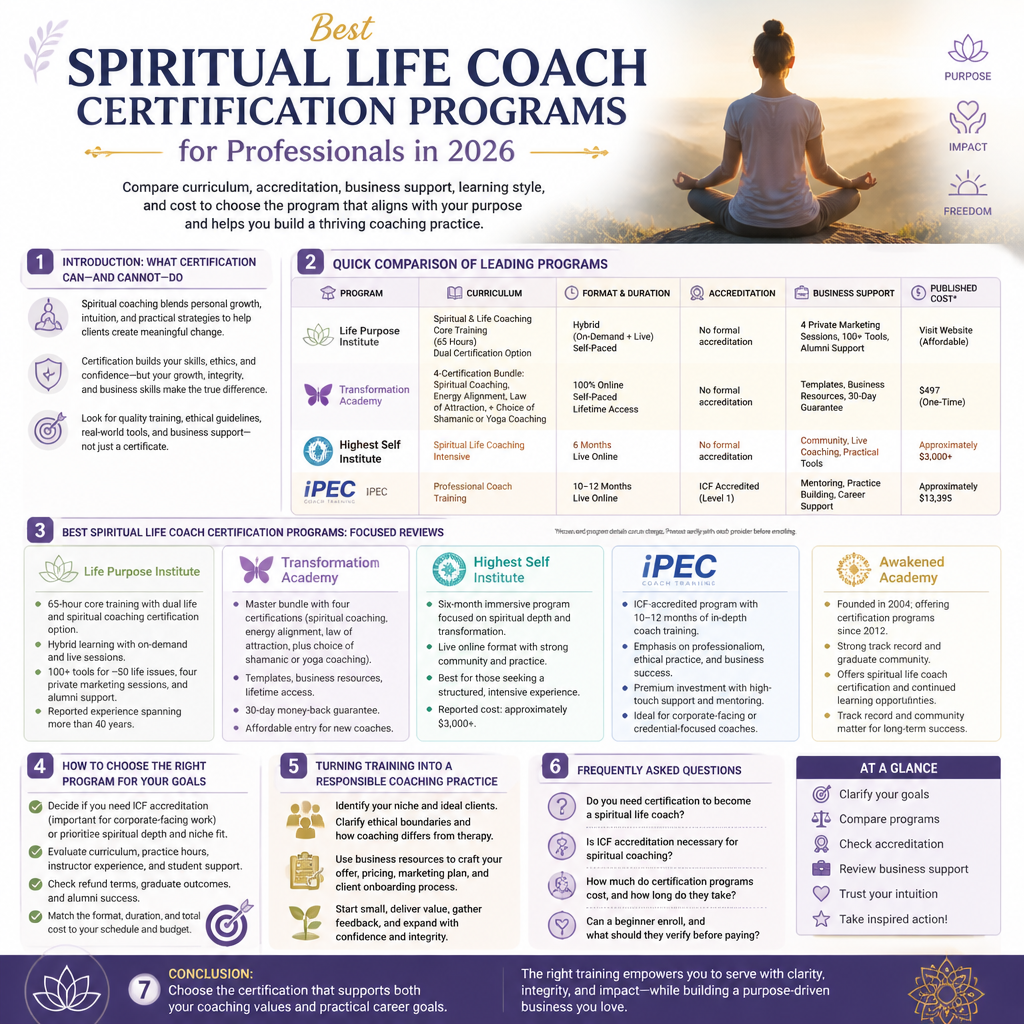
Choosing a spiritual life coach certification is about more than adding a credential to your bio. If you want to offer spiritual coaching for professionals, you need training that helps you coach ethically, work confidently with clients, and build a service people can understand and trust. The right program should fit your beliefs, schedule, budget, and career goals—not simply promise a dramatic transformation.
Below, I compare five options: Life Purpose Institute, Transformation Academy, Highest Self Institute, iPEC, and Awakened Academy. I also explain what certification can and cannot do, how to assess accreditation, and what to put in place before taking on paying clients. Prices and program details can change, so confirm current terms with each provider before enrolling.
What a spiritual life coach certification can—and cannot—do
Spiritual coaching uses coaching conversations and reflective practices to help clients explore meaning, values, purpose, and personal growth. Depending on the coach’s training and the client’s preferences, tools may include guided reflection, visualization, mindfulness, or values-based goal setting. It should not require clients to adopt the coach’s religion or worldview.
For professionals, this work may address questions such as, “Does my career still align with what matters to me?” or “How can I make a difficult transition without losing my sense of purpose?” A coach can help a client clarify goals and take practical steps. Coaching is not psychotherapy, medical care, or a substitute for either. Coaches should recognize when a client’s needs fall outside their competence and refer them to an appropriate licensed professional.
A certificate can provide structured learning, supervised practice, and a framework for ethical work. It does not automatically guarantee client results, professional recognition, or a successful business. Look for personal development and practical coaching skills alongside spiritual content—and assess claims carefully.
Quick comparison of spiritual life coach certification programs
| Program | Published details to compare | Potential fit | Reported cost |
|---|---|---|---|
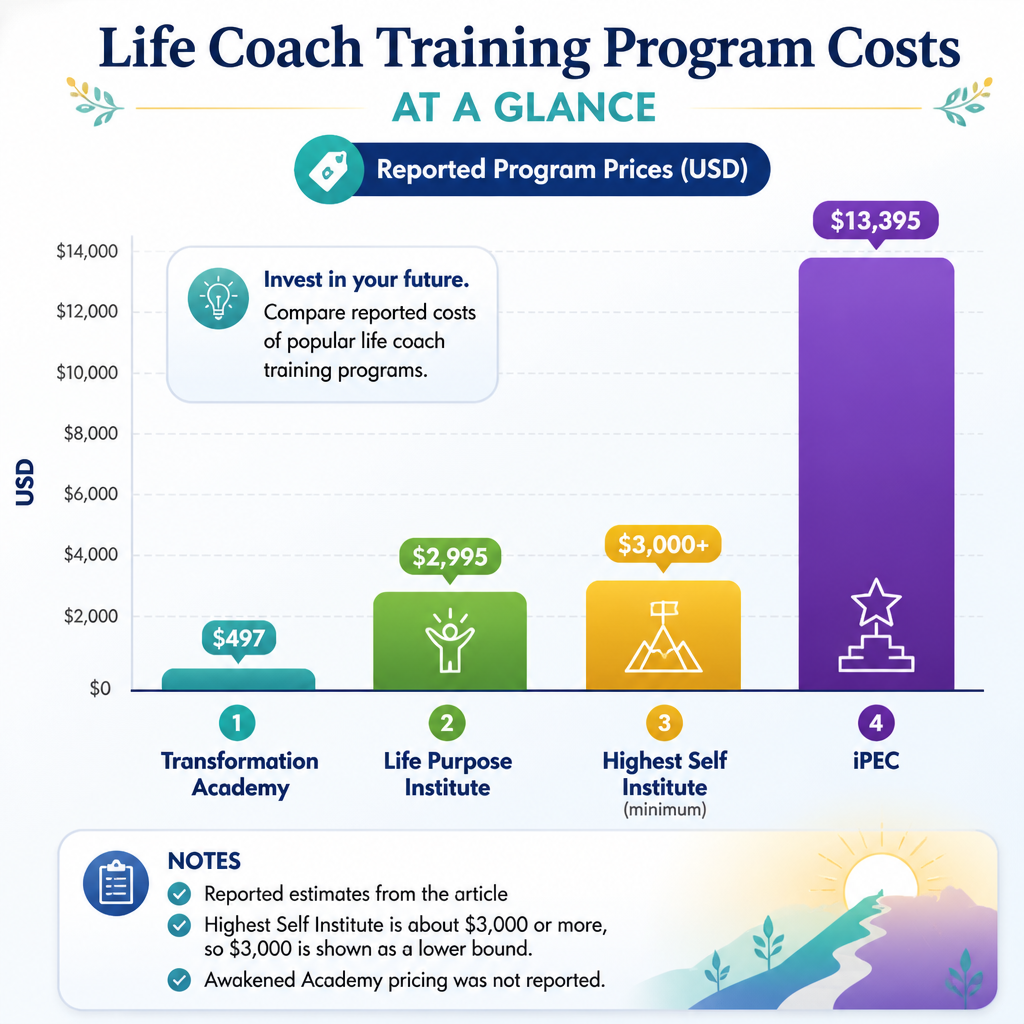
| Life Purpose Institute | 65-hour core training; hybrid on-demand and live learning; 100+ tools addressing about 50 life issues; four private marketing sessions. Dual life and spiritual coaching certification is available. | Learners seeking structured coaching skills, live practice, and some business support. | About $2,995 in the research provided; verify directly. |
| Transformation Academy | Four-certification master bundle: spiritual coaching, energy alignment, law of attraction, and a choice of shamanic or yoga coaching; templates and lifetime access. | Budget-conscious beginners who want self-paced introductory training and ready-to-use resources. | $497 reported for the full bundle. |
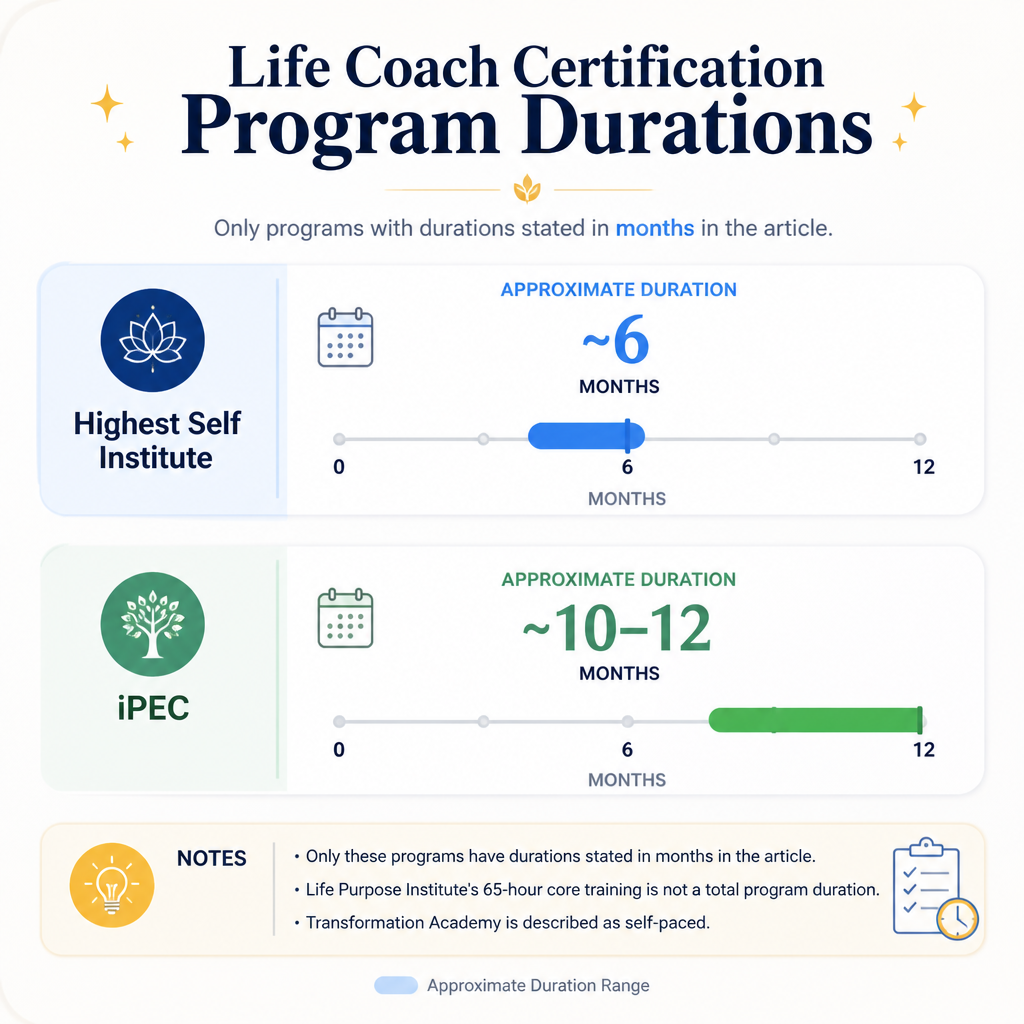
| Highest Self Institute | Reported six-month program with an immersive spiritual focus. | Learners prioritizing a dedicated spiritual-development environment. | About $3,000+ reported; confirm curriculum and inclusions. |
| iPEC | Premium coach-training option with a longer, approximately 10–12-month commitment. | Those seeking extensive professional training and prepared to make a larger investment. | About $13,395 reported; check current tuition and credential pathway. |
| Awakened Academy | Reportedly founded in 2004 and certifying coaches since 2012; consider its track record and graduate community when researching. | Learners who value an established provider and want to investigate its community and approach. | Confirm directly with the provider. |
These figures are comparison points, not guaranteed current quotes. Ask each provider for the full tuition, payment-plan charges, assessment fees, and any additional costs for mentoring or credential applications.
Best spiritual life coach certification programs: focused reviews
1. Life Purpose Institute: a balanced coaching and spiritual approach
Life Purpose Institute’s spiritual coach certification combines professional coaching with spiritual tools. The published program information describes a 65-hour core training, on-demand videos, and live interactive sessions. The institute also reports more than 40 years of experience in the field. Its curriculum is described as offering over 100 tools for working with around 50 common life issues.
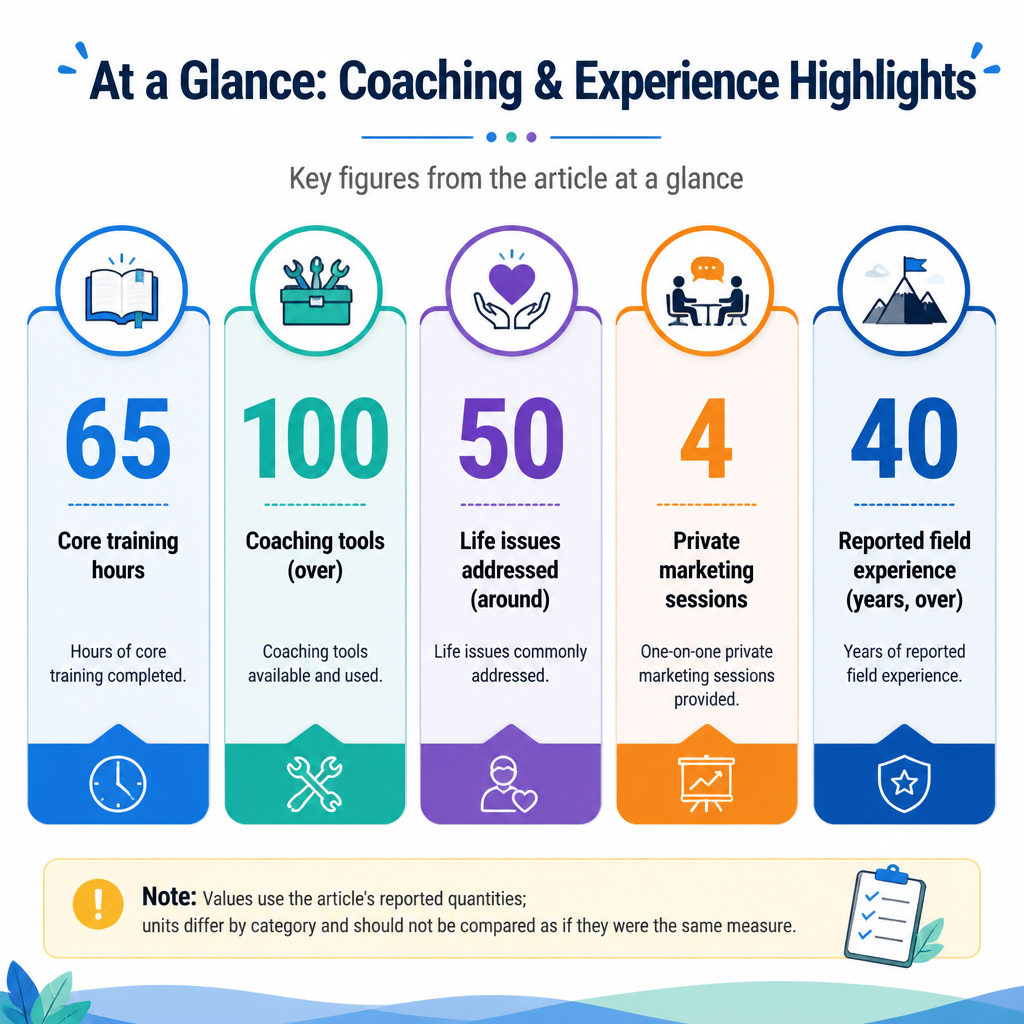
One practical advantage is business support: the program information includes four individual marketing sessions, along with an alumni community and ongoing classes. A dual life and spiritual coaching certification option may suit someone who wants to serve clients with both everyday goals and questions of meaning or purpose.
Best for: Professionals who want a blend of coaching fundamentals, spiritual methods, live learning, and some help thinking about marketing. Before enrolling, ask how practice sessions are assessed, what credential the training qualifies you to pursue, and what support continues after graduation.
2. Transformation Academy: an accessible, self-paced bundle
Transformation Academy’s Master Spiritual Life Coach Certification is presented as a four-part bundle: spiritual coaching, energy alignment, law of attraction, and a choice between shamanic or yoga coaching. The reported price is $497, with lifetime access, coaching templates, questionnaires, agreements, and workbooks. The provider also lists a 30-day guarantee and CPD accreditation; check the applicable terms and what that accreditation means for your intended market.
The low price and self-directed format can make this an approachable starting point for a beginner. Templates may help you organize client sessions, but they are not a replacement for practice, feedback, or a careful understanding of ethical boundaries. A broad bundle also may not offer the same depth of supervised coaching practice as a longer professional program.
Best for: Budget-conscious learners who want introductory content and can stay disciplined in an online, self-paced course. Review a sample lesson, the assessment method, and the refund conditions before purchasing.
3. Highest Self Institute: an immersive spiritual focus
Available research describes Highest Self Institute as offering a program of about six months, with reported pricing of roughly $3,000 or more. That makes it a mid-to-higher investment compared with short self-paced certificates. Its potential appeal is an immersive learning experience centered on spiritual development.
The details available for comparison are limited, so do not assume that duration alone tells you how much practice or individual feedback is included. Ask for a syllabus, weekly time commitment, instructor biographies, cohort size, and a clear breakdown of tuition. Find out whether the program teaches coaching competencies and client safeguarding as well as spiritual concepts.
Best for: Learners drawn to a dedicated spiritual coaching environment who have confirmed that the course’s methods, teaching style, and practical training match their needs.
4. iPEC: a premium, longer-term training option
iPEC is a substantial investment: the reported cost is about $13,395, and the program may take 10–12 months. A longer, intensive course may appeal to professionals seeking a broad coach-training experience rather than a quick niche certificate. It can also be relevant if you expect to work with organizations or want to compare formal coaching credentials and recognized training pathways.
At this price, compare the total package rather than the headline number. Ask what coaching practice, mentor support, assessments, materials, and post-training resources are included. Confirm the current credential eligibility and any separate fees with the provider and the relevant credentialing organization. Premium tuition is not, by itself, proof that a program is the right fit.
Best for: People prepared for a longer commitment and higher cost who value comprehensive professional training. Make a realistic plan for both study time and return on investment.
5. Awakened Academy: assess its track record and community
Awakened Academy is reported to have been founded in 2004 and to have certified coaches since 2012. Longevity can be useful context, especially if a provider has an active alumni community, but it should not replace your own review of the curriculum and outcomes.
Ask how the program balances inner or spiritual development with coaching technique, supervised practice, ethical standards, and business preparation. If possible, speak with graduates whose career goals resemble yours. Their experience can help you understand how accessible instructors are and whether the community remains active after certification.
Best for: Prospective students who value an established provider and want to investigate its teaching approach, graduate network, and support in detail.
How to choose the right program for your goals
Before comparing prices, write down what you want the training to help you do. For example: coach executives through career transitions, support purpose-led entrepreneurs, or build a small private practice for individual clients. A clear goal makes it easier to separate essential features from appealing extras.
- Decide whether accreditation matters for your audience. If you plan to work with corporate clients, employers may value formal coaching education or a recognized credential. ICF accreditation can be relevant, but distinguish an ICF-accredited training program from an individual ICF credential; they are not interchangeable. Check current requirements directly with ICF. In a spiritual niche, the quality of practice, ethics, and fit may matter just as much to prospective clients.
- Inspect the curriculum and practice requirements. Look for coaching foundations, listening and questioning skills, goal setting, ethics, boundaries, and opportunities to practice with feedback. Ask how many live practice hours are expected and who evaluates them.
- Check the instructors and student support. Review instructors’ experience, class size, response times, mentoring, and alumni access. A supportive community can help you keep learning after the course ends.
- Compare the full cost and schedule. Include tuition, payment fees, books, assessments, and any optional add-ons. Be honest about your weekly availability. A lower-cost course is not a bargain if you cannot complete it; an intensive course is not worthwhile if its format does not fit your life.
- Ask about outcomes and policies. Request examples of graduate pathways, while remembering that testimonials are not guarantees. Read cancellation, refund, and deferral terms before paying.
Turn training into a responsible coaching practice
A certificate is the beginning of the work, not the entire business plan. Start by defining a specific client and a practical outcome. “I help mid-career professionals clarify their values and plan a purposeful career transition” is easier to understand than “I help everyone reach their highest potential.” Keep the promise realistic and within your competence.
Next, write down your coaching boundaries. Explain what coaching includes, what it does not include, how confidentiality works, and when you may recommend therapy or another service. Use a written agreement and an intake process that lets clients make an informed choice. Avoid guarantees about healing, income, relationships, or spiritual awakening.
Build a simple first offer: for example, a discovery conversation followed by a six-session coaching package, with clear goals and a review at the end. Set a price that reflects your experience, market, and costs. Ask early clients for specific feedback—not just praise—and use it to improve your process. A small, well-defined service is usually easier to test than a complicated menu of packages.
Finally, make marketing an extension of your service. Share useful, grounded ideas about the challenges you understand. Be transparent about your training and experience, and describe spiritual tools in plain language. For professionals who may be wary of vague claims, clear explanations and respectful boundaries build more trust than grand promises.
Frequently asked questions
Do you need certification to become a spiritual life coach?
Requirements vary by location and by the services you offer. Coaching is not regulated in the same way everywhere, but training can help you build skills, ethical awareness, and client confidence. Check local rules and avoid presenting yourself as a therapist or other licensed provider unless you hold the relevant license.
Is ICF accreditation necessary for spiritual coaching?
Not necessarily. It may be useful when pursuing corporate work or a credential pathway that values ICF education. For other spiritual coaching practices, prospective clients may prioritize experience, fit, clear boundaries, and relevant training. Confirm exactly what a program’s accreditation covers rather than relying on a logo or general claim.
How much do spiritual coaching certification programs cost, and how long do they take?
The options compared here range from a reported $497 self-paced bundle to about $13,395 for a premium 10–12-month program. Other reported examples include roughly $2,995 for Life Purpose Institute and $3,000 or more for Highest Self Institute. Treat these as estimates from the research available and verify current pricing, duration, and additional fees with each provider.
Can a beginner enroll, and what should they verify before paying?
Some programs, including Transformation Academy’s bundle, report no prerequisites. Beginners should still check whether a course teaches core coaching skills, includes meaningful practice and feedback, and explains ethical limits. Request the syllabus and refund policy, confirm total costs, and ask what support is available if you struggle to complete the training.
The best program is the one that fits your practice
The best spiritual life coach certification for you is not automatically the longest, most expensive, or most spiritual-sounding option. Choose training that develops your coaching ability, respects your values, and prepares you to serve a defined group responsibly. For professionals, that often means balancing spiritual depth with clear methods, credible practice, and practical business skills.
Shortlist two or three programs, ask the same questions of each, and compare the answers side by side. When you can explain who you help, how you work, and where your role ends, you are in a much stronger position to build a meaningful coaching practice.