
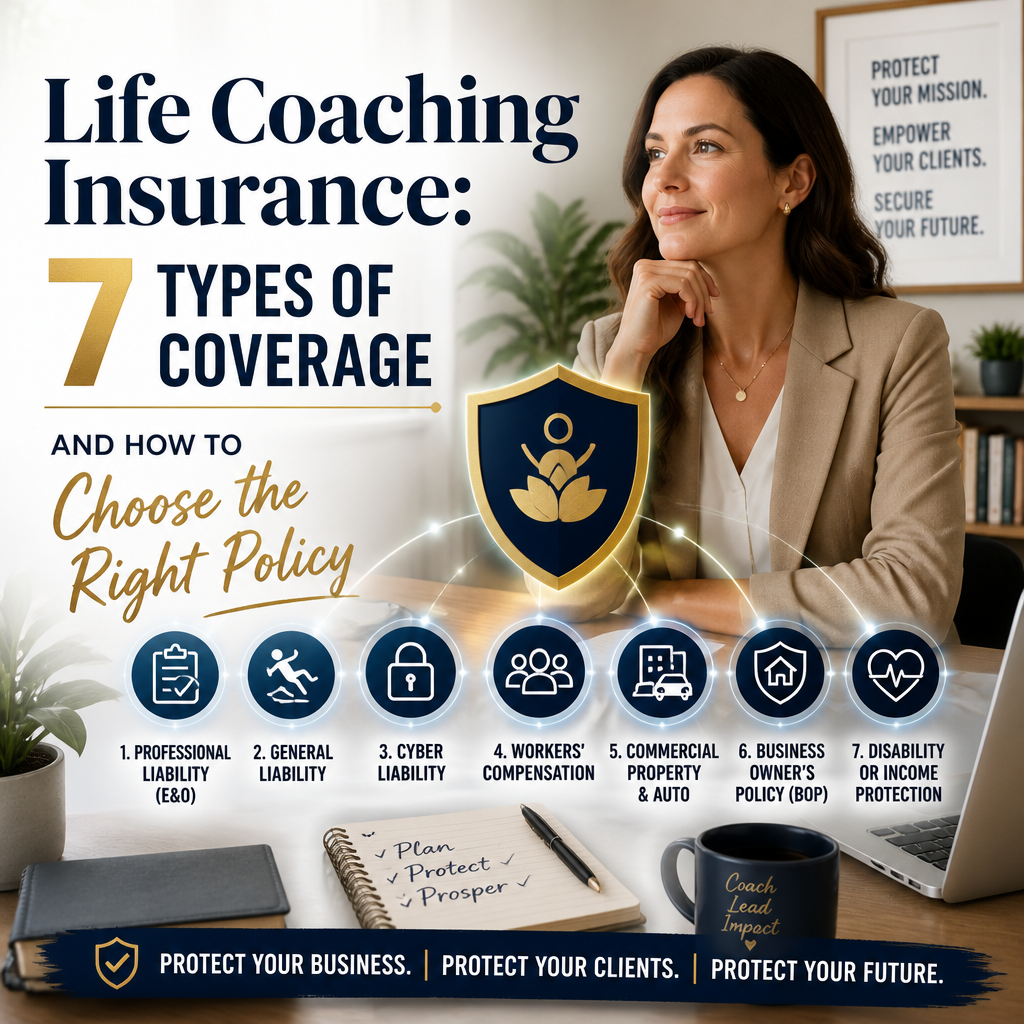
Life Coaching Insurance: 7 Types of Coverage and How to Choose the Right Policy
Imagine a client leaves a coaching session unhappy, later says your advice contributed to a major life decision, and asks you to pay for the loss. Or picture someone slipping on the way into your rented office. Even if you acted responsibly, responding to a complaint or accident can consume time, money, and energy you had planned to spend serving clients.
That is where life coaching insurance may help. It is not a substitute for sound coaching, clear agreements, or appropriate professional boundaries, and legal requirements vary by location. But the right policy can help protect your finances and give you a plan for handling certain covered claims. In this guide, I’ll walk through seven types of coverage, explain who may need them, and share practical questions to ask before you buy.

What risks do life coaches face?
Coaching is built on trust, conversation, and personal change. Those strengths can also create exposure. Clients may have different expectations about what coaching will achieve, or disagree with how a session went. A person might allege that advice was negligent, that a promise was not fulfilled, or that private information was mishandled. An allegation is not proof of wrongdoing, but defending against one can still be costly.
There are also risks that have little to do with the coaching conversation itself. A client could be injured during an in-person appointment. A laptop or other business property might be stolen. A cyber incident could expose client notes or payment information. If you employ staff, workplace rules and employee injuries may matter. And if illness or injury keeps you from working, your business income could drop.
Insurance policies address different risks. The key is not to buy every type automatically; it is to understand which risks apply to the way you work.
7 types of life coaching insurance
1. Professional liability insurance (errors and omissions)
Professional liability insurance, often called errors and omissions (E&O), is a central policy to consider for advice-based work. Depending on its wording, it may help with claims alleging negligence, errors, omissions, or harm arising from your professional services. Some policies may also address claims involving libel or slander, confidentiality, or services you provided in the past. Coverage, exclusions, and defense arrangements vary, so read the policy rather than relying on a label.
For example, a client might claim they made a major career or financial decision because of something discussed in a coaching session and allege that your guidance caused them a loss. A professional liability policy may help pay covered legal defense costs and, where applicable, a settlement or judgment, subject to limits, exclusions, and the insurer’s terms. It does not mean every complaint will be covered or that a coach is protected from every consequence.
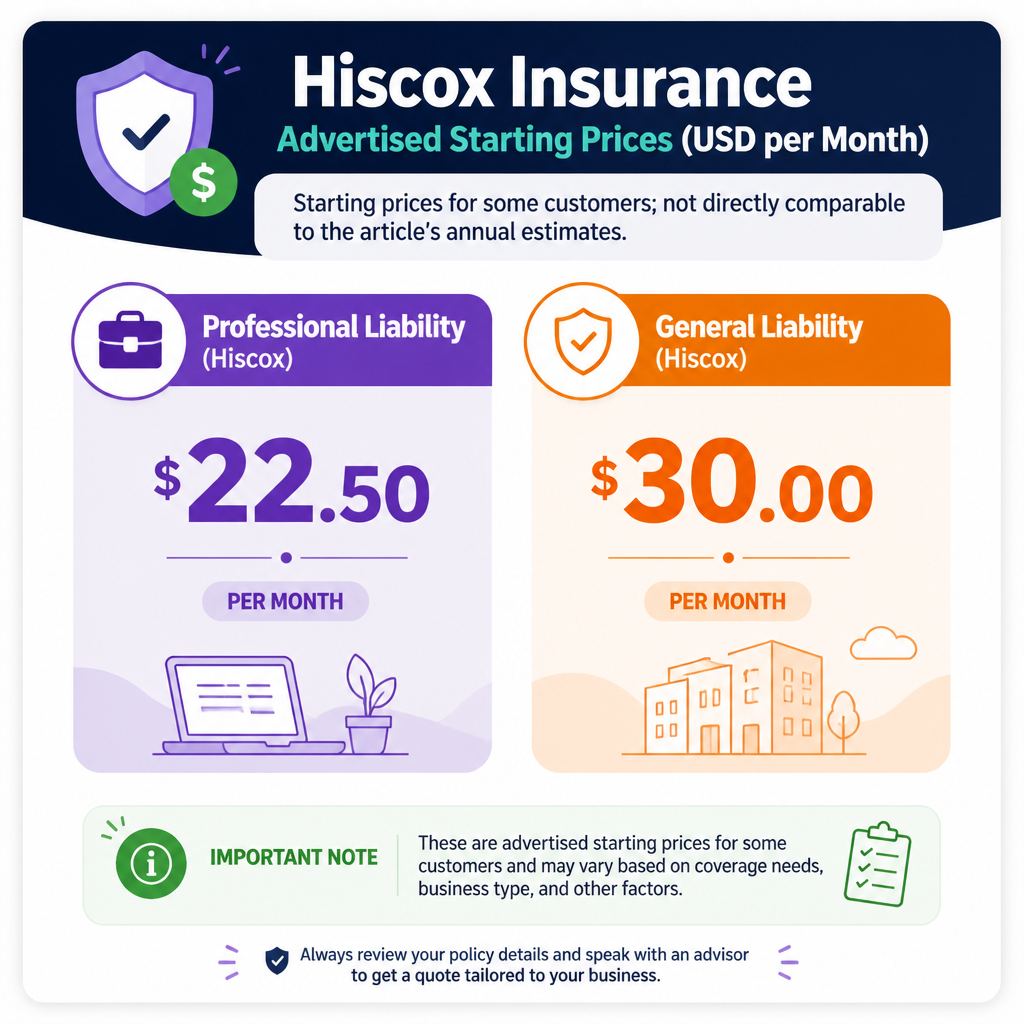
One research source estimates professional liability at about $1,057 per year, while Hiscox advertises starting prices of $22.50 per month for some coverage. These are different kinds of estimates, not a quote for your business. Your price depends on factors such as location, services, revenue, limits, and claims history.
2. General liability insurance
General liability is primarily for certain third-party bodily injury and property damage claims. It is especially relevant if you meet clients in person, work from a rented studio or office, hold workshops, or visit clients’ premises.
Say a client trips over a bag in the room where you hold a session and is injured. Or you accidentally damage property at a venue during a group event. General liability may respond to covered claims of this kind. It generally is not a replacement for professional liability: a dispute about the quality of your coaching is a different risk from a slip-and-fall accident.
One estimate puts general liability at roughly $500 per year. Hiscox lists rates starting as low as $30 per month for some customers. Actual pricing and coverage depend on the insurer, location, business activities, and policy terms.
3. Cyber liability insurance
Online coaches often store client contact details, session notes, intake forms, billing data, and messages across computers and cloud services. A stolen device, compromised password, phishing attack, or software breach could expose that information or interrupt your business.
Cyber liability coverage may help with certain costs following a covered cyber event. Depending on the policy, that could include investigation, notifying affected people, legal advice, data recovery, or responding to a claim. Policies differ significantly, and some may require specific security practices. Ask what counts as a covered event, whether social-engineering fraud is included, and what support is available after an incident.
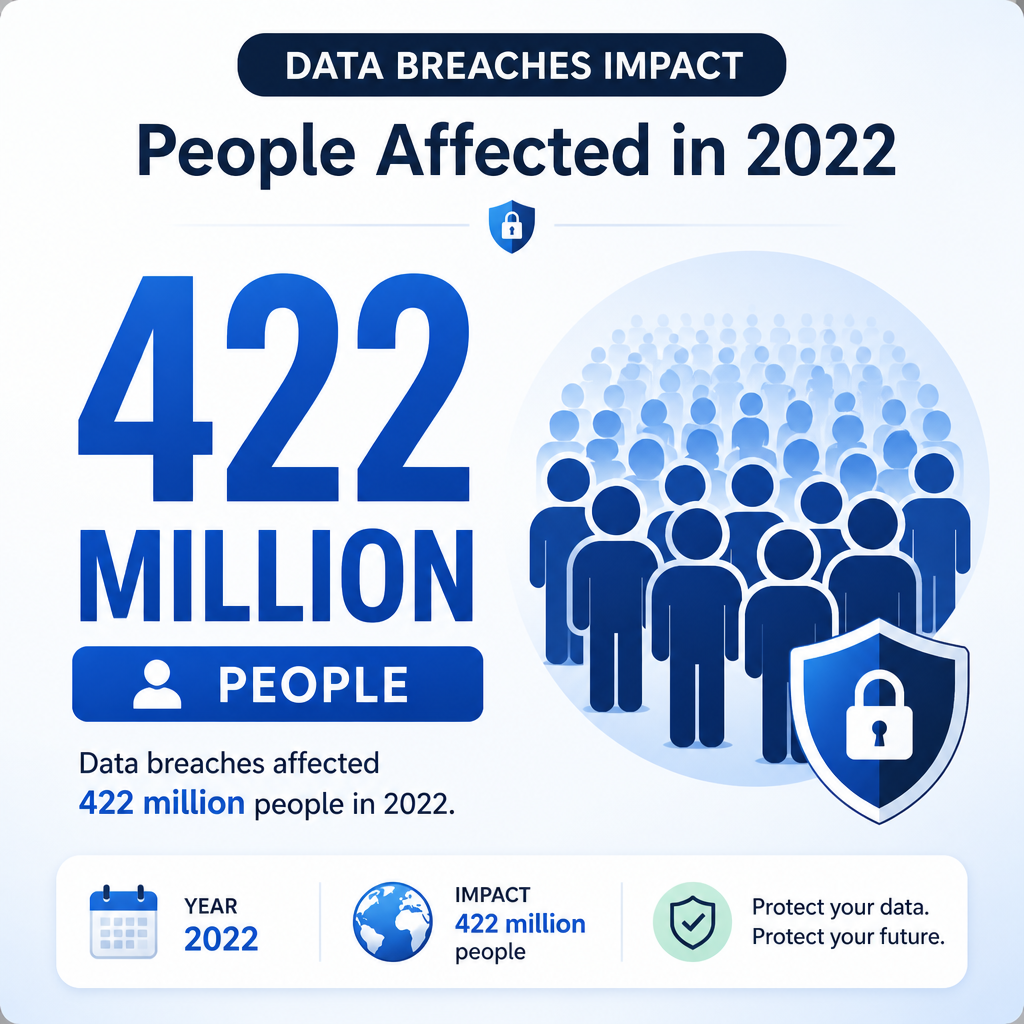
The research cited in this article reports that data breaches affected 422 million people in 2022. That figure is a reminder of the scale of the issue, not a prediction of an individual coach’s risk. One source estimates cyber coverage at around $2,000 per year; premiums vary widely by business size, data handled, coverage limits, and insurer.
4. Workers’ compensation insurance
If you hire employees, workers’ compensation may be required under the rules where your business operates. It commonly relates to eligible employee work injuries or illnesses and may provide specified benefits, subject to local law and policy terms. Requirements can depend on factors such as the number of employees, their classification, and the type of work.
Do not assume that calling someone a contractor settles the question. Worker classification and insurance obligations are determined by applicable rules, which can be complex. Check with your local regulator, a qualified insurance professional, or a legal adviser before hiring. One research estimate puts the annual cost at about $540, but the actual premium can be higher or lower depending on payroll, location, and job classifications.
5. Commercial property and auto insurance
Commercial property insurance may help protect business-owned equipment or contents, such as computers, cameras, office furniture, and supplies, against covered losses. If you own or rent a dedicated office, ask whether the policy covers the premises, your contents, or both. A landlord’s insurance usually should not be assumed to cover your business property.
Personal auto insurance may not cover every use of a vehicle for business. If you drive regularly to clients, events, or coaching locations, ask your insurer whether your current policy covers that activity or whether commercial auto coverage is appropriate. One source gives an approximate $1,800 annual estimate for commercial coverage, but the category and cost depend on what is insured. Get a quote tailored to your property and vehicle use.
6. Business owner’s policy (BOP)
A business owner’s policy, or BOP, commonly bundles general liability and commercial property coverage. Bundling may be convenient and can sometimes cost less than buying policies separately. A BOP may suit a coach with an office, equipment, or in-person activities who wants several basic protections together.
But “bundle” does not mean “everything is covered.” A BOP may not include professional liability, cyber coverage, commercial auto, workers’ compensation, or business interruption in the form you need. Some protections may be available as add-ons, with separate limits and exclusions. One source estimates BOP premiums at about $500–$2,000 per year. Compare the actual coverage and total price with separate policies before deciding.
7. Disability or income protection
For a solo coach, the ability to work may be one of the business’s most important assets. Disability insurance or income protection may replace part of your personal income if a covered illness or injury prevents you from working. It is not the same as business interruption insurance, which may address certain business expenses or lost income after a covered event affecting the business itself.
Check how the policy defines disability, how long you must wait before benefits begin, how long benefits can last, and whether your coaching work qualifies under its terms. You may need to document your income, and benefits depend on eligibility and policy conditions. The research estimate suggests premiums can be around 1%–3% of income, but your circumstances and selected benefit will affect the cost.

Which life coaching insurance should you choose?
Start by matching coverage to your actual work. For many coaches, professional liability is a sensible first policy to investigate because the service itself involves guidance and client expectations. Then consider the other risks that come with your delivery model:
- Online solo coach: Consider professional liability and assess cyber coverage if you keep sensitive client records or rely on online platforms. Review how your home or personal policies treat business equipment.
- Coach who meets clients in person: Look at general liability in addition to professional liability, particularly if you rent space, host workshops, or visit client locations.
- Coach with employees: Check local workers’ compensation requirements and ask whether your existing liability policies cover the activities your staff perform.
- Coach with an office, equipment, or a business vehicle: Compare commercial property, auto, or a BOP, and confirm that the locations and business uses you have are included.
- Coach whose household depends on business income: Explore disability or income protection and consider how long you could manage if you could not coach.
You do not need to buy all seven policies just because they exist. A coach working remotely with no employees and minimal equipment has a different risk profile from a coach running group events from a leased studio. Choose deliberately, and revisit your coverage when your services, staff, revenue, or work locations change.
How to compare policies and providers
When you request quotes, compare the policy wording—not only the premium. I would ask an insurer or broker these questions:
- Are all my coaching services covered, including group programs, workshops, online sessions, and work with clients in different locations?
- Do I need to disclose additional practices such as mentoring, consulting, breathwork, or hypnotherapy? Are they covered in writing?
- What are the per-claim and annual policy limits, and what deductible or excess would I pay?
- Are legal defense costs included within the limit or paid in addition to it?
- Does the policy cover past services? If it is claims-made coverage, what retroactive date applies, and what happens if I change insurers or stop the policy?
- What exclusions apply to refunds, guarantees, financial advice, disputes between business partners, or allegations of intentional conduct?
- What cyber safeguards are required, and what should I do immediately if client data is exposed?
- Does my lease, event venue, client contract, or local law require particular coverage or limits?
Ask for answers in writing and read the schedule, endorsements, definitions, and exclusions. A short conversation with a salesperson can help you understand options, but it is not a substitute for checking the contract. If a policy term is unclear, ask the insurer to explain it before you buy.
Progressive, Hiscox, and CM&F are providers mentioned in the research for this article and may be options to investigate. Their availability and products can vary by location, and inclusion here is not an endorsement. Compare several licensed providers or speak with an independent broker who understands professional services.
How much does life coaching insurance cost?
Use the figures in this guide as broad reference points, not guaranteed rates. The research estimates include roughly $1,057 a year for professional liability, $500 for general liability, $2,000 for cyber liability, $540 for workers’ compensation, $1,800 for commercial coverage, and $500–$2,000 for a BOP. A provider’s advertised starting price may be much lower than an estimate for a different coverage level or business profile.
Your quote may depend on where you operate, annual revenue, number of employees, claims history, coaching methods, client locations, data practices, coverage limits, and deductible. Adding services beyond standard life coaching can also change eligibility or premiums. Request current quotes based on a precise description of your work, and compare equivalent limits and exclusions rather than choosing the lowest headline price.
A practical action checklist
- List your services. Include one-to-one coaching, group programs, workshops, and any related practices.
- Map how you work. Note whether sessions are online, in your office, at client premises, or at event venues.
- Inventory your exposures. Record client data you keep, equipment you own, vehicles used for work, and any employees or contractors.
- Check requirements. Review local rules and obligations in your lease, client agreements, and event contracts.
- Get multiple quotes. Compare limits, deductibles, exclusions, defense costs, and past-services coverage—not just price.
- Set a review date. Revisit your policy at renewal and whenever your business changes substantially.
Final thoughts
The right life coaching insurance depends on the clients you serve and the way you deliver your services. Professional liability is an important place to start evaluating; general liability, cyber, workers’ compensation, property, auto, a BOP, and income protection may be relevant depending on your circumstances.
Insurance is a risk-management tool, not a promise that every dispute will be covered. Pair it with clear client agreements, careful recordkeeping, responsible coaching boundaries, and honest explanations of what coaching can and cannot provide. Then choose coverage that fits your real risks and budget, and ask questions until you understand what the policy does—and does not—protect.