

What Is Life Coaching? What Life Coaches Do, Benefits, and Real-Life Examples
People often know they want something to change—at work, in their routines, or in their relationships—but are unsure what to do next. Life coaching offers structured support for clarifying what matters and taking practical steps toward it. But what is life coaching, exactly, and what can a life coach realistically help you accomplish?
Here’s how coaching works, examples of common goals, how it differs from therapy, and what to consider before choosing a coach.
What Is Life Coaching?
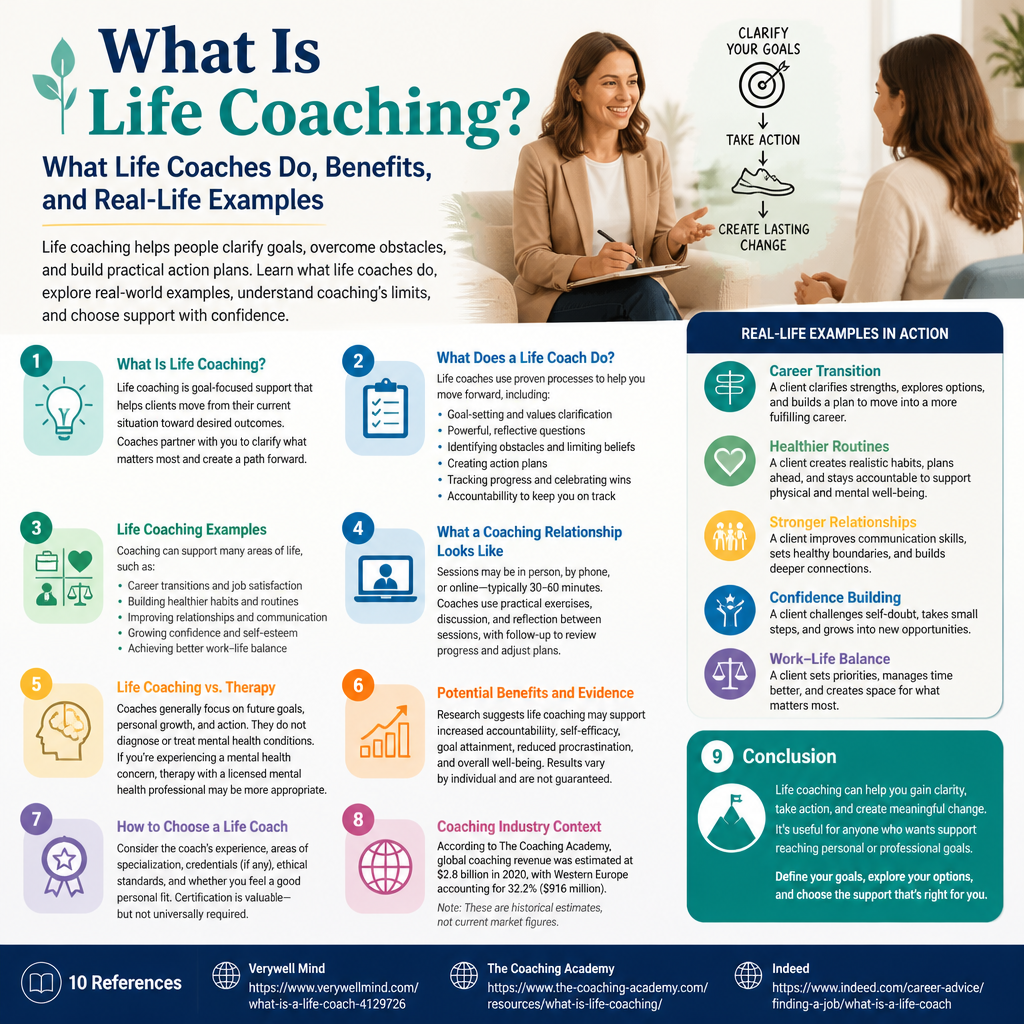
Life coaching is a collaborative, goal-focused process that helps a person move from their current situation toward a desired outcome. A life coach works with clients to clarify priorities, identify obstacles, consider options, and create achievable action plans.
Rather than telling you what to do, a coach will typically ask questions that help you examine your assumptions and make your own decisions. The work is generally oriented toward the present and future: what you want, what may be getting in the way, and what you can do next.
Life coaching is not one single method. Some coaches focus broadly on personal goals, while others specialize in areas such as career development, relationships, health habits, confidence, or work-life balance. Coaching can be delivered in person, by phone, or online.
What Does a Life Coach Do?
A life coach helps turn a broad ambition into a specific and manageable plan. The exact process varies, but sessions may include:
- Clarifying goals: Defining what you want to change and why it matters to you.
- Exploring obstacles: Identifying practical barriers, unhelpful routines, or beliefs that may be slowing progress.
- Considering options: Looking at different ways forward and deciding which ones fit your circumstances.
- Creating action steps: Breaking a larger goal into realistic tasks with timelines.
- Reviewing progress: Checking what worked, what did not, and whether your plan needs adjusting.
- Providing accountability: Following up on commitments and helping you stay focused between sessions.
A coach may also use reflection prompts, planning exercises, or progress tracking. The client remains responsible for choosing and carrying out their actions; coaching is support, not a guarantee of a particular result.
Life Coaching Examples
Life coaching can apply to many everyday goals. Here are a few examples of what the process might look like:
- Career transition: Someone who feels stuck in their job could identify the kind of work they want, explore training or networking options, and set weekly steps toward a career change.
- Healthier routines: A person who wants more consistent exercise might look at what disrupts their schedule and develop a realistic routine that fits their week.
- Confidence and decision-making: A client facing an important choice could define their priorities, compare options, and decide on a next step rather than staying in a cycle of indecision.
- Relationships: Someone hoping to communicate more clearly could identify the conversations they are avoiding and plan how to approach them. Coaching does not replace couples therapy or treatment when those are needed.
- Work-life balance: A busy professional might review how they spend their time, set boundaries, and test changes to make more room for personal priorities.
These examples are illustrative, not promises. A coach can help a client plan and stay accountable, but outcomes depend on the person’s situation, choices, and the quality of the coaching relationship.
What Does a Coaching Relationship Look Like?
Coaching often begins with a conversation about your goals, expectations, and the areas where you want support. You and the coach can agree on what you will work on and how you will assess progress. Some people choose a short, focused engagement; others prefer ongoing sessions while working toward longer-term goals.
Sessions may take place face-to-face, by phone, or through video calls. A typical meeting might include a check-in, discussion of a recent challenge, a practical exercise, and agreement on one or more actions to try before the next session. The coach may ask you to reflect on what you learned or track a habit between meetings.
Before starting, ask about session length, fees, cancellation terms, confidentiality, and how progress is reviewed. Clear expectations can help both you and the coach understand whether the arrangement is useful.
Life Coaching vs. Therapy
Life coaching and therapy can both involve supportive conversations, but they have different purposes and professional boundaries. Life coaches generally help clients set and pursue goals, strengthen decision-making, and make changes in their lives. They typically do not diagnose mental health conditions or provide mental health treatment.
Therapists are trained and licensed or otherwise regulated according to the rules in their jurisdiction. They can assess and treat mental health conditions and may help people address distress, trauma, or patterns rooted in past experiences. Therapy can also support future goals, so the distinction is not simply that one looks forward and the other looks backward.
If you are experiencing persistent depression or anxiety, trauma-related symptoms, thoughts of self-harm, or distress that interferes with daily life, consider contacting a licensed mental health professional. A coach should be willing to recognize the limits of their role and refer you to appropriate care when needed. Coaching and therapy may sometimes complement one another, but coaching should not be presented as a substitute for treatment.
Potential Benefits and What the Evidence Says
People seek coaching for different reasons, and results are not the same for everyone. Potential benefits include greater clarity about priorities, a more structured approach to goals, regular accountability, and increased confidence in taking action. Having someone help you break a large ambition into smaller steps may also make it easier to get started.
Research on coaching has reported positive outcomes in areas such as goal progress, self-efficacy, and well-being. Some findings suggest that individual or group coaching may help reduce procrastination. However, results depend on factors such as the coaching approach, the client’s goals, and the quality of the research. Coaching is not a guaranteed solution, and evidence for one program should not automatically be applied to every coach or client.
It may be useful to define what progress would look like before you begin. For example, you might aim to make a career decision, establish a weekly routine, or complete a specific project. Concrete goals make it easier to judge whether coaching is helping.
How to Choose a Life Coach
Because coaching is not regulated in the same way everywhere, it is worth doing some research before committing. Consider these points:
- Relevant experience: Look for experience or training related to the goal you want to work on.
- Credentials and training: Ask what education, coach training, or professional certification they have. Certification is not universally required, but recognized training can indicate a commitment to professional standards.
- Ethics and boundaries: A responsible coach should explain confidentiality, avoid guaranteeing results, and be clear about what coaching can and cannot do.
- Working style: Ask how sessions are structured and how the coach handles goals, feedback, and accountability.
- Personal fit: An introductory conversation can help you decide whether you feel respected, understood, and comfortable being honest with the coach.
- Practical details: Confirm fees, scheduling, format, and cancellation policies before you begin.
Be cautious if a coach pressures you to make a quick decision, claims they can cure a health condition, or encourages you to stop treatment recommended by a qualified clinician. You should be able to ask questions and end the arrangement if it is not meeting your needs.
A Note on the Coaching Industry
The coaching field includes professionals with varied backgrounds and specializations. The Coaching Academy estimated global coaching revenue at $2.8 billion in 2020 and attributed 32.2% of that market—about $916 million—to Western Europe. These are historical estimates from 2020, not current market figures, and they should be understood in that context.



Is Life Coaching Right for You?
Life coaching may be useful if you have a goal you want to pursue, feel uncertain about your next steps, or would benefit from structure and accountability. It is not a fit for every situation, and it cannot replace mental health care when treatment is needed.
Before choosing a coach, write down what you want to change and what a meaningful result would look like. Then ask potential coaches about their approach, experience, boundaries, and fees. A clear goal and a trustworthy working relationship can help you decide whether life coaching is the right support for your next step.