
A clear, step-by-step guide to journal coach certification—what it really means, what you’ll learn (therapeutic writing, facilitation, emotional safety, and integrations), how credibility and ethical scope work, and how to choose the right program (online or live). Includes real-world program examples and a practical 90-day plan to turn certification into your first paying clients.
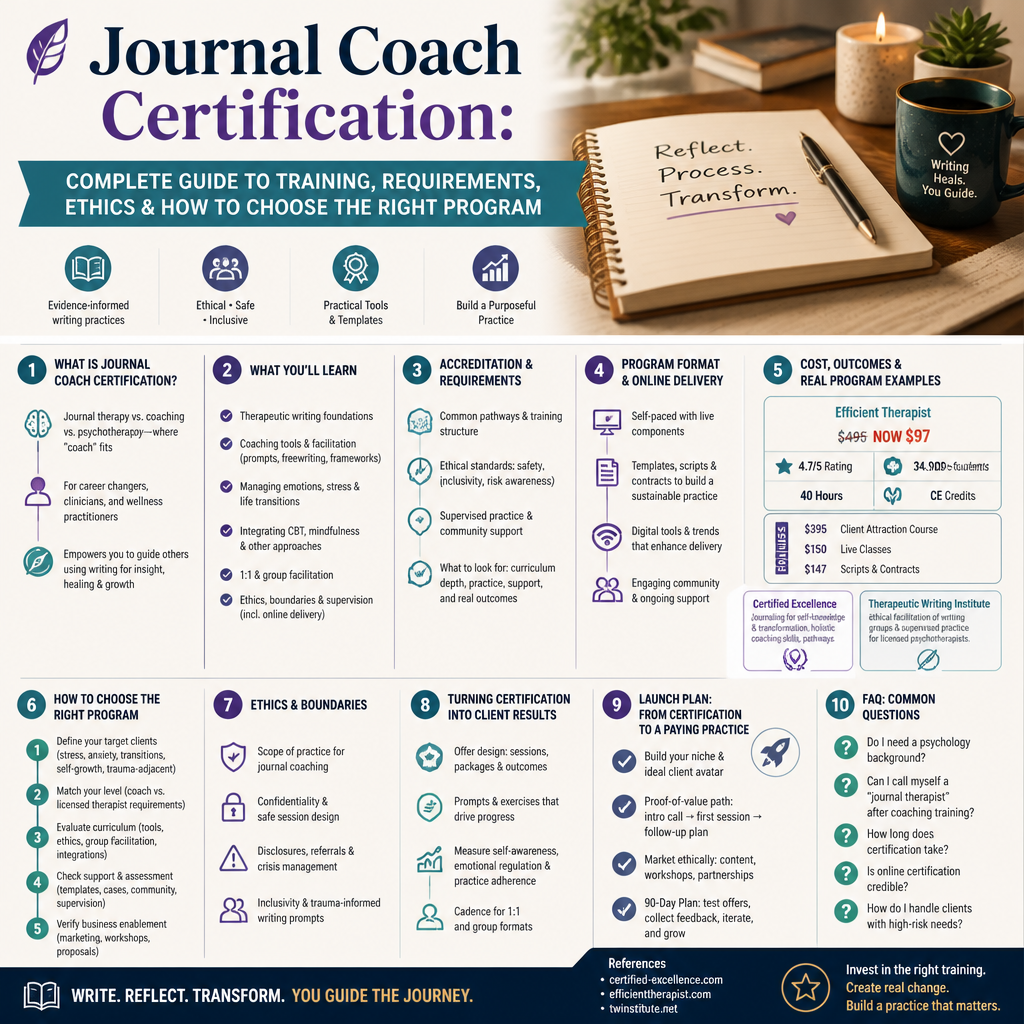
1) Quick orientation: what “journal coach certification” really means
Journal coach certification is training that helps you facilitate structured journaling experiences for personal growth and emotional processing—typically in coaching contexts rather than as licensed psychotherapy. The goal is to learn how to guide clients safely using writing-based interventions (prompts, exercises, and facilitation methods) while staying within an appropriate scope of practice.
Journal therapy vs. coaching vs. psychotherapy: where the title “coach” fits
- Journal therapy: An umbrella term for using writing intentionally for psychological and emotional change. Some programs prepare you to work with groups and structured processes.
- Coaching: Focuses on goals, self-awareness, habit change, and skills for living well. Coaching is not the same as diagnosing or treating mental disorders.
- Psychotherapy: Delivered by licensed professionals and involves clinical diagnosis and treatment plans. “Journal therapist” roles may be connected to licensed mental health practice depending on the program and your credentials.
In practice, many “journal coach certification” programs teach therapeutic writing techniques and ethical facilitation, while clearly differentiating what coaches can and can’t claim.
Who certification is for (career changers, clinicians, wellness practitioners)
You may consider journal coach certification if you want to:
- Transition into a writing-and-support career (career changers who enjoy coaching, reflection, and helping others).
- Add a niche to an existing practice (wellness coaches, counselors, HR/wellbeing leaders, EAP providers).
- Complement your clinical work (licensed therapists who want group facilitation skills for self-understanding).
- Work digitally with online clients using structured prompts and guided reflection.
2) What you’ll learn in a journal coach certification program
While each provider is different, top journal coach certification programs generally teach a combination of foundations, facilitation skills, ethics, and how to apply it in real client sessions.
Therapeutic writing foundations (psychological basis, origins, how journaling supports change)
Expect education on:
- Why journaling can support self-awareness and emotional processing (through reflection, meaning-making, and patterns).
- Different journaling approaches (freewriting, structured prompts, and theme-based exercises).
- What “change” can look like in coaching terms (better emotion regulation, clarity, action planning, healthier narratives).
Coaching tools and facilitation methods (freewriting and structured prompts)
You should learn how to facilitate exercises without turning sessions into an improvised “write whatever” experience. Strong programs cover:
- Freewriting practices for exploration and reducing internal barriers.
- Structured prompts designed to help clients move from reflection to insight.
- Session scripting (how you open, guide, debrief, and assign a practice for between sessions).
Managing emotions, stress, and personal transition through writing
A credible curriculum goes beyond “journaling is good.” It teaches how to work with:
- Stress and overwhelm using grounded prompts and regulation-oriented formats.
- Emotional themes (anger, grief-adjacent processing, worry, identity shifts) in a coaching-safe way.
- Life transitions (moving, relationship changes, career shifts) with action-oriented reflection.
Integrating approaches (e.g., CBT and mindfulness as complements)
Some programs teach how journaling can integrate with established frameworks such as:
- CBT-style thought restructuring (reframing, identifying patterns)
- Mindfulness practices (noticing, grounding, present-moment language)
Important: integration should be taught as “coaching support,” not as a replacement for professional mental health care.
Working with groups and/or 1:1 sessions
Depending on the program, you may learn:
- 1:1 session delivery (client-specific prompt selection and follow-up plans).
- Group facilitation (dynamics, pacing, and safe participation rules).
Ethics, boundaries, and supervision (especially for online delivery)
Ethics training is not optional. Look for clear coverage of:
- Boundaries and scope (what you can promise vs. what you must not claim).
- Confidentiality and safe handling of sensitive disclosures.
- Risk awareness (how you respond if a client shares high-risk content).
- Inclusivity and trauma-informed language for prompts.
- Supervised practice and feedback loops (especially if the program offers community support or case discussions).
3) Accreditation, credibility, and certification requirements
Many people search for “journal coach certification” because they want credibility. The key is understanding what “certified” typically means in this space—and what it does not guarantee.
Common certification pathways and typical application/training structure
You’ll usually see one of these pathways:
- Online training course (modules on theory + practice + ethical guidelines).
- Additional supervised practice for facilitation skills and confidence.
- Special track for licensed professionals (e.g., therapists becoming certified journal therapists).
For example, some programs position themselves as complete training for journal therapy coaching and include continuing education credits, business enablement, and practical templates.
Ethical practice standards: safety, inclusivity, risk awareness
Credible programs emphasize that writing exercises can bring up intense material. That means:
- You must be careful with how prompts are structured.
- You must normalize pacing (and give clients the ability to pause).
- You must handle disclosures with care and clear boundaries.
Supervised practice and community support: why they matter
If a program includes supervised practice, peer community, templates, case studies, or facilitator feedback, it typically helps you:
- avoid common delivery mistakes
- learn how to debrief writing safely
- build confidence in selecting prompts based on client readiness
What to look for in “certified” credentials (curriculum depth, facilitation practice, support)
Use this checklist when comparing programs:
- Curriculum depth: Are tools and facilitation taught, not just described?
- Ethics coverage: Does the program explicitly teach boundaries, risk awareness, and inclusivity?
- Practice elements: Are there templates, scripts, contracts, or practice teaching?
- Assessment: Do you complete assignments, receive feedback, or work through case examples?
- Ongoing support: Is there community, updates, or continuing education?
4) Program format and delivery: what changes online
Self-paced vs. live components
- Self-paced: Good for busy schedules; you must still create accountability for practice.
- Live sessions: Often better for facilitation practice, Q&A, and supervised feedback.
- Hybrid: Frequently the strongest approach—learn theory in modules, then practice in live coaching or workshops.
Templates, scripts, and contracts: turning training into a sustainable practice
One advantage of well-built journal coach certification programs is that they may include “business enablement” materials such as:
- Client intake forms
- Session scripts (how to guide a session)
- Prompt libraries (organized by theme and goal)
- Contracts and disclosure language (to clarify scope and risk boundaries)
These resources help you move from “I’m trained” to “I’m ready to deliver responsibly.”
Digital trends in journal therapy coaching (how technology can support delivery)
Online delivery commonly includes:
- Video or phone sessions for facilitation and debriefing
- Printable or digital worksheets for prompts
- Follow-up routines (check-ins, adherence tracking, reflection prompts)
Tip: Even with digital tools, the ethical work is the same—choose prompts carefully and handle disclosures with appropriate boundaries.
5) Cost, outcomes, and learner expectations (using current market examples)
Costs vary widely based on curriculum depth, credit hours, live support, and whether facilitation practice is included.
Example program pricing and learner metrics
Here are some market examples from current journal therapy coaching and training offers (pricing and metrics reflect the sources listed below):
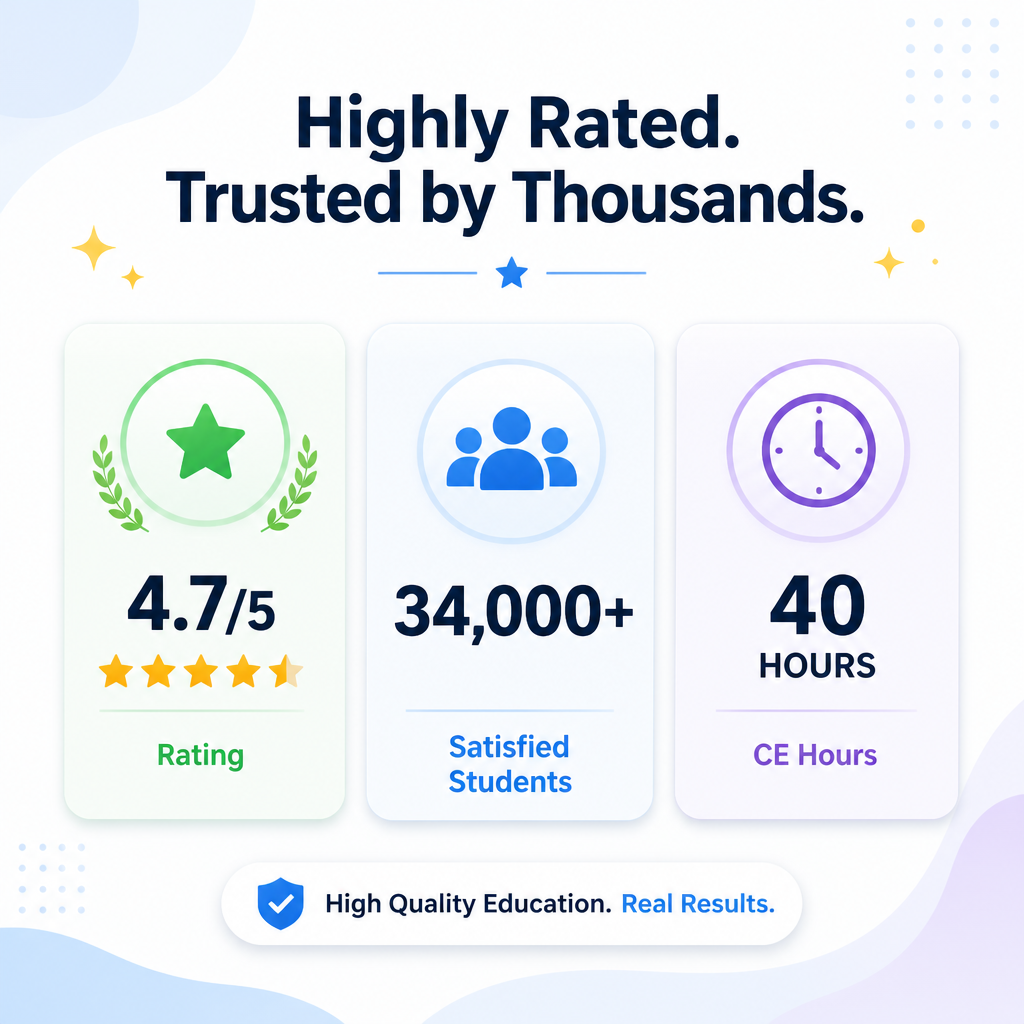
- Efficient Therapist lists a journal therapy certification priced originally at $495 and currently at $97, with a 4.7/5 rating, 34,000+ satisfied students, and 40 hours of continuing education credits. It also references bonuses valued at $395 (Client Attraction Course), $150 (Live Classes), and $147 (Scripts and Contracts). (See: Efficient Therapist – Certify as a Journal Therapy)
- Certified Excellence emphasizes journaling for self-knowledge and transformation, holistic coaching skills, and pathways to supporting clients. (See: Certified Excellence – Certified Course to Become a Journal Therapy Coach)
- Therapeutic Writing Institute focuses on ethical facilitation of writing groups, core theory, and supervised practice for licensed psychotherapists seeking certification as journal therapists. (See: Therapeutic Writing Institute – Certified Journal Therapist)


What learners should reasonably expect outcomes to be
Most learners should expect outcomes like:
- Improved facilitation confidence (how to guide a session and debrief writing)
- A prompt and tools library that maps to goals (stress, self-growth, transition support)
- Better ethical clarity about boundaries and risk management
- Business readiness if the program provides scripts, contracts, templates, and marketing help
What you should not assume: that a certificate automatically makes you a clinical provider. Always align your claims with your training and your jurisdiction’s professional rules.
6) How to choose the right journal coach certification (a decision framework)
Use this 5-step framework to compare programs quickly.
Step 1: define your target clients
Be specific about the kind of support you want to offer (and can ethically offer). Examples:
- stress and overwhelm coping through writing routines
- anxiety-adjacent processing in a coaching context
- self-growth, self-trust, confidence-building
- life transitions (identity, purpose, moving forward)
Step 2: match your level (coach vs. licensed therapist requirements)
If you’re not a licensed clinician, choose a program that teaches you how to remain in coaching scope (skills, goals, self-awareness). If you are licensed, confirm what “certified” adds (often group facilitation and structured ethical delivery).
Step 3: evaluate curriculum coverage
Ask: Does the program teach:
- therapeutic writing foundations
- prompt design and facilitation methods
- emotional safety and ethical boundaries
- integration ideas (CBT/mindfulness-style supports)
- group facilitation if you want groups
Step 4: check support and assessment
Look for evidence of practice and feedback:
- case studies
- community or peer review
- supervised practice or facilitator coaching
- templates, scripts, and real deliverables
Step 5: verify business enablement
If your goal is paid clients, check whether the program includes:
- offer design guidance (packages, session formats)
- marketing and workshop creation ideas
- proposals, contracts, and intake processes
7) Ethics and boundaries: what a coach should—and shouldn’t—do
Ethics is the foundation of credibility. Journal coaching involves personal material, so strong boundary-setting protects clients and you.
Scope of practice for journal coaching
In coaching scope, you typically:
- help clients build insight and clarity
- support skill-building (emotional regulation routines, reflection habits)
- guide goal-setting and accountability
You typically must not:
- diagnose mental health conditions
- claim to treat illnesses
- act as a substitute for licensed therapy when clinical needs are present
Confidentiality and safe session design
- Explain confidentiality clearly in onboarding.
- Use safe session structures: start with grounding, offer pacing, and debrief.
- Offer options to pause or redirect when content becomes intense.
Handling disclosures, referrals, and crisis situations
Ethical delivery includes:
- knowing how to respond when a client discloses high-risk information
- having a referral pathway (or emergency guidance) where required
- documenting and following your program’s guidance and local legal/ethical expectations
Inclusivity and trauma-informed considerations in writing prompts
A trauma-informed approach in journal coaching often means:
- avoiding prompts that force detailed re-experiencing
- using choice-based language (“you may choose…”)
- providing grounding tools alongside processing tools
- ensuring diverse clients feel respected and not judged
8) Turning certification into real client results
Offer design: session formats, packages, and outcomes you can responsibly claim
Your outcomes should reflect coaching scope. Examples of responsible outcomes:
- greater self-awareness and pattern recognition
- improved emotional regulation habits
- clearer goals and a practical action plan
- consistent journaling practice and reflection routines
Prompts and exercises: how to structure sessions for progress
A practical session flow you can adapt:
- Check-in: client’s current emotional state and goal for today.
- Grounding: brief breath/grounding or “choose your starting point.”
- Writing exercise: a prompt matched to readiness.
- Debrief: what patterns emerged, what felt safe, what needs refinement.
- Integration: identify one insight and one next step.
- Between-session practice: a short journaling assignment with pacing guidelines.
Measurement: track self-awareness, emotional regulation, and practice adherence
You can measure coaching progress without pretending to be a clinical instrument. Options include:
- client self-rating (e.g., clarity, calmness, confidence) on a simple scale
- journaling completion and consistency
- qualitative feedback (“what’s different since last week?”)
Facilitation cadence for 1:1 and group formats
Common cadence examples:
- 1:1: weekly or biweekly sessions for 4–8 weeks, then maintenance.
- Groups: 60–90 minute sessions with short between-session journaling tasks.
Choose a cadence you can sustain ethically and deliver consistently.
9) Launch plan: from certification to a first paying practice
Build your niche (who you help, what journaling outcomes you target)
Start with one clear niche and one clear outcome. Examples:
- “Journal coaching for stress relief routines and better emotional clarity.”
- “Journal coaching for life transitions: meaning-making and next-step planning.”
Create a simple proof-of-value path (intro call → first session → follow-up plan)
Your early pipeline can look like:
- Intro call: identify goals and readiness; clarify scope.
- First session: deliver a high-quality prompt + debrief; co-create a practice plan.
- Follow-up: send a tailored “next prompt” and a short progress check.
Marketing that aligns with ethics (content ideas, workshops, partnerships)
Marketing ethically means educating rather than promising clinical outcomes. Content ideas:
- blog posts about journaling routines for stress and self-awareness
- short workshops (e.g., “A 20-minute guided prompt for clarity”)
- partnerships with wellness communities and coaches
A practical 90-day validation plan (offers, feedback loops, iteration)
Use this simple validation plan to build real traction:
- Days 1–15: finalize your offer (session format, outcomes, boundaries). Create 5–10 pieces of lead content.
- Days 16–45: recruit 3–5 pilot clients (low-cost or coaching “test” packages). Collect structured feedback after each session.
- Days 46–75: refine prompts, onboarding, and session flow. Adjust pricing and packaging based on what clients value.
- Days 76–90: launch the refined offer publicly. Offer one group workshop or a short cohort to generate testimonials.
10) FAQ: common questions about journal coach certification
Do I need a psychology background?
No, not always. Many programs teach foundations directly. However, you should be comfortable with reflective practice and be willing to learn ethics, safety, and scope-of-practice boundaries.
Can I call myself a “journal therapist” after coaching training?
Be cautious. If your training is coaching-oriented, you may be better positioned to use terms like journal coach or journal therapy coach. “Journal therapist” may imply a clinical or therapist credential depending on your program and local regulations. Always use wording that matches your training and scope.
How long does certification take?
It varies by provider and whether you include live components and supervised practice. Review the training structure carefully and confirm how you’ll complete the practice requirements.
Is online certification credible?
Online programs can be credible, especially when they include ethical training, facilitation practice, templates, assessments, and support. Evaluate deliverables—not just the delivery format.
How do I handle clients with high-risk needs?
You need a clear process for disclosures and referrals. Your certification program should outline risk awareness and boundaries. If clinical needs arise, you should refer to appropriate licensed professionals as required by law and ethics.